Dementia Care at Bloomington Cove - Using doll therapy

Bloomington Cove Care Community is home to 113 residents in rural Stouffville. It is the only licensed long-term care home in Ontario solely providing care to those with dementia. Programs are based on current evidence-based practices and non-clinical approaches help to enhance quality of life for residents living with this challenging disease. This story is about how one resident, Mrs. Lu, benefitted from doll therapy

Success with student nurses comes easy for Extendicare Lakefield

Extendicare Lakefield is a long-term care home committed to providing clinical placements to nursing students. We strive to make the learning journey meaningful.

Resources to guide LTC teams in delivering compassionate, resident- and family-centred care at end of life. Offers tools for symptom management, communication, advance care planning, and staff support.

Palliative and end-of-life care

Resources to guide LTC teams in delivering compassionate, resident- and family-centred care at end of life. Offers tools for symptom management, communication, advance care planning, and staff support.

External link
The brochure contains information to guide those caring for First Nations and Indigenous Peoples related to advanced care planning. Although created in BC, it can be applicable to Ontario residents.  
External link
This Advance Care Planning website helps Ontarians learn about Advance Care Planning (ACP) and includes information about: having a conversations to help people and their substitute-decision-maker (SDM) towards preparing for future healthcare decisions considering what's important to you and how to involve your SDM Ontario law and substitute decision-making  © 2024 Hospice Palliative Care Ontario.   
External link
The Bereavement Risk Assessment Tool, or BRAT, is a psychosocial assessment tool used by care teams to communicate personal, interpersonal and situational factors that may place a caregiver or family member at greater risk for a significantly negative bereavement experience.
External link
The CANHELP caregiver questionnaire was designed to evaluate satisfaction with care for older patients with life threatening illnesses, and the family members. A straight forward satisfaction instrument that you can use t rate the quality of care at the programs or organization level. Reference: CARENET Canadian Researchers at the End of Life Network. (n.d.). CANHELP Tool.  The CARENET © 2025
External link
The CHPCA is the national voice for hospice palliative care in Canada. Advancing and advocating for quality end-of-life/hospice palliative care, its work includes public policy, public education and awareness.   © 2024 Canadian Hospice Palliative Care Association.
Document
A comprehensive, holistic assessment of individuals and their families at end-of-life. Reprinted with Permission from Canadian Hospice Palliative Care Association.  Registered Nurses' Association of Ontario.  (2011). Appendix K of End-of-Life Care During the Last Days and Hours. Toronto, ON: Author.  pp. 114-115. 
External link
This link provides information and support for professionals on palliative and end-of-life care, loss and grief.  There is a list of clinical tools and useful resources to enhance palliative and end life care.  Copyright 2003-2025 Canadian Virtual Hospice.
External link
Goals of Care discussions help a person living with a life-limiting illness understand the serious nature of their illness. If the person is incapable, the discussions are with their substitute decision-maker. Goals of Care discussions also help healthcare providers to understand the patient’s values and goals for their care. Cancer Care Ontario
External link
This information fact sheet is developed as a supplement to the RNAO Nursing Best Practice Guideline document for nurses. Registered Nurses’ Association of Ontario. (2011).  Care In The Last Days And Hours Of Life.  Toronto, Canada: Author. 
External link
These Indigenous Palliative Care Fact Sheets are developed to support First Nations, Inuit, Métis and urban Indigenous people living with a life-changing illness and their families, caregivers and communities. Cancer Care Ontario. (2013). Palliative Care Toolkit for Indigenous Communities.
Document
Diseases such as chronic obstructive pulmonary disease or congestive heart failure run a more fluctuating course and result in death in a less predictable timeframe than diseases such as renal disease or dementia. Each exacerbation can lead to remission (and future exacerbation) or death; knowing which will occur on any given admission is extremely challenging. General indicators of poorer prognosis (life expectancy of only weeks to many weeks) include poor performance status, impaired nutritional status and a low albumin level. Registered Nurses’ Association of Ontario. (2011). Appendix E of End-of-Life Care During the Last Days and Hours. Toronto, Canada: Author. pp103-105 .
External link
On Mar. 17, 2021, the federal government passed Bill C-7 to amend the Criminal Code to expand eligibility for Medical Assistance in Dying (MAID). Use the CNO site to find important updates, information and resources that impact nurses in Ontario on the subject of MAID. © 2025 College of Nurses of Ontario
External link
Residents with severe dementia or other end stage diseases eat less as part of the natural progression of their disease. Research at end of life suggests that as residents eat and drink less they do not suffer from hunger or thirst. This session will focus on “Comfort Feeding Only” (CFO), when oral intake is not sufficient to sustain life, and if prolonging life with artificial hydration is not consistent with the residents' wishes (as expressed by the resident or their substitute decision maker (SDM)). This webinar is intended for long-term care leaders facilitating practice change and direct care staff that will benefit from understanding CFO process and the goal of the feedings to achieve comfort by employing the least invasive and potentially most satisfying way to provide nutrition. During this webinar, participants will: Understand process followed to identify gap, develop policy and implementation of CFO How to have a conversation with resident, family/SDM for comfort feeding only Learn different implementation strategies to initiate CFO Know strategies focusing on safe positioning and swallowing Recognize symptoms such as dry mouth that can be alleviated with minimal oral intake and/or oral care Presented by Dr. Evelyn Williams and Jennifer Wong - Veteran's Centre Sunnybrook Health Sciences Centre in collaboration with Registered Nurses’ Association of Ontario (2017). Comfort Feeding Only(CFO): Managing Feeding at End-of-Life. RNAO You Tube. Retrieved from https://youtu.be/OB_HMSqKcao
Document
Figure 2 from, A Palliative Approach to Care in the Last 12 Months of Life, illustrates complex issues that persons and their families may face when receiving palliative care, which are categorized into eight equally important domains. Registered Nurses’ Association of Ontario (2020). A Palliative Approach to Care in the Last 12 months of Life. Toronto, ON: Author.
External link
Figure 2 from, A Palliative Approach to Care in the Last 12 Months of Life, illustrates complex issues that persons and their families may face when receiving palliative care, which are categorized into eight equally important domains. Registered Nurses’ Association of Ontario (2020). A Palliative Approach to Care in the Last 12 months of Life. Toronto, ON: Author.
External link
Early Identification & Prognostic Guide for Clinicians by Mississauga Halton PCN - This Early Identification and Prognostic Indicator Guide aims to help family physicians, specialist physicians and nurse practitioners in earlier identification of those patients nearing the end of life who could benefit from a palliative care approach to care. Thomas. K et al. Prognostic Indicator Guidance, 4th Edition. The Gold Standards Framework Centre In End of Life Care CIC, 2011. Adaptation of guide completed by Mississauga Halton Regional Hospice Palliative Care Committees with permission from K. Thomas Copyright © 2025 Ontario Health at Home. All rights reserved.
Document
The revised Edmonton Symptom Assessment System (ESAS-r) is available in multiple languages and is designed to assist in the assessment of 10 common symptoms: pain, tiredness, drowsiness, nausea, lack of appetite, shortness of breath, depression, anxiety, well-being and constipation. It conveys the individual’s description of the severity of a symptom based on a scale ranging from 0 to 10.  Registered Nurses’ Association of Ontario. (2011). Appendix F of End-of-Life Care During the Last Days and Hours. Toronto, Canada: Author. pp. 106-107. 
External link
The brainXchange End of Life Care section contains presentation slides and resources on end of life care, including care related to persons in the final stages of dementia.  © 2025 brainXchange™
Document
A tool to assist with comparing your organization’s current practice with evidence-based RNAO best practice recommendations. Registered Nurses Association of Ontario (2022). Opportunity Analysis-End-of-Life Care During Last Days and Hours. Toronto, ON.
External link
This brochure prepared by Alzheimer's Association provides support in preparing for the end of life, especially when families must make choices. © 2016 Alzheimer’s Association®
Document
This scale's purpose is to determine how nurses feel about certain situations in which they are involved with patients. All statements concern nursing care given to the dying person and/or his/her family. Where there is a reference to a dying patient, assume it refers to a person who is considered to be terminally ill, with six months or fewer to live. Registered Nurses' Association of Ontario. (2011). Appendix G of End-of-Life Care During the last Days and Hours. Toronto, ON: Author pp. 108-109 Source: Folmelt, K. American Journal Hospice Palliative Care (Vol. 8, Issue 5) pp. 37-43 Copyright 1991 By Sage Publication    
External link
The Cancer Care website links to the guidelines for palliative care. The target population is any individual requiring palliative care. All Clinicians and staff involved in the delivery of palliative care can use this guideline.  
External link
The Advocacy Centre for the Elderly (ACE) website provides various information related to health care consent and advance care planning, frequently asked questions and resources. Copyright © 2025 The Advocacy Centre for the Elderly (ACE).
External link
This section of the brainXchange website focuses on health care consent and advance care planning, with many presentations and resources available to help when caring for persons at the end of life.  © 2025 brainXchange™
External link
This guide is intended to help health care/hospice palliative care professionals and volunteers to have a conversation with and/or respond to patients or their families around Medical Assistance in Dying (MAiD). © 2024 Canadian Hospice Palliative Care Association.
External link
The Hospice Palliative Care Ontario offers many educational resources for caregivers including Advance Care Planning and Health Care Consent for Health Service Providers. There is also a Palliative Care Core Course for Interdisciplinary staff which covers pain and symptom management, ethical decisions, communication and end of life in dementia. Materials are freely accessible. Copyright © Hospice Palliative Care Ontario 2023
External link
Implementing a Palliative Approach to Care in Long Term Care, is an implementation guide and resource toolkit that aligns with the expanded Palliative Approach to Care requirements within the Fixing Long-Term Care Act, 2021 (FLTCA). The document is divided into 3 sections, each section starts with content related to the section’s theme, followed by a comprehensive list of resources, including hyperlinks. 1. Key concepts in a palliative approach to care 2. Mentorship, education and support to build competency and capacity 3. Implementing a palliative approach to care  
Document
Implementing a Palliative Approach to Care in Long Term Care, is an implementation guide and resource toolkit that aligns with the expanded Palliative Approach to Care requirements within the Fixing Long-Term Care Act, 2021 (FLTCA). The document is divided into 3 sections, each section starts with content related to the section’s theme, followed by a comprehensive list of resources, including hyperlinks. 1. Key concepts in a palliative approach to care 2. Mentorship, education and support to build competency and capacity 3. Implementing a palliative approach to care  
External link
Developed by a Canadian research team who has been funded by the Canadian Institutes for Health Research to explore the ethical, policy, and practice implications of Medical Assistance in Dying for Nurses. As part of our knowledge translation strategy, a Reflective Guide for Nurses that addresses six main areas of nursing practice in relation to Medical Assistance in Dying: nurses’ experiences, making moral sense, best practices, common dilemmas, and self-care. The Reflective Guide includes a video that provides a compelling insight into a few nurses’ experiences with Medical Assistance in Dying. This free guide can be used for individual study or as part of an educational offering. Author: CIHR IRSC, Funding from CIHR: CIHR Project Grant PJT-148655; CIHR Project Grant PJT-169144
External link
Cancer Care Ontario website links to best-practice tools from around the world to support primary care providers in the delivery of palliative care.  Tools are organized according to the 3-step model of best practice: Identify, Assess, and Plan. For resources tailored to support First Nations, Métis and Inuit families and communities, please see Tools for the Journey: Palliative Care in First Nations, Inuit and Métis Communities , a Resource Toolkit, developed by the Aboriginal Cancer Control Unit at Cancer Care Ontario.  
External link
On June 16, 2016, the federal government passed legislation to amend Canada’s Criminal Code and established a federal framework for Medical Assistance in Dying (MAID) for individuals who meet pre-defined eligibility criteria. MAID, as defined by the Government of Canada, refers to: The administering by a medical practitioner or nurse practitioner of a substance to a person, at their request, that causes their death. The prescribing or providing by a medical practitioner or nurse practitioner of a substance to a person, at their request so that they may self-administer the substance, and in doing so, cause their own death. As part of its efforts to implement a consistent approach to the MAID process in Ontario, the Ministry of Health and Long-Term Care (MOHLTC) has engaged the Centre for Effective Practice (CEP) to develop a resource to support clinicians (physicians and nurse practitioners) with the provision of MAID.  Centre for Effective Practice. (2019). Medical Assistance in Dying (MAID): Ontario (rev).
External link
Medical assistance in dying (MAID) has been legal in Canada since 2016. Nurse practitioners, physicians, pharmacists, and “persons aiding practitioners” (including nurses) are permitted to help those who have explicitly requested MAID. Resources: CNA Statement on the Passage of Bill C-14 (media release) Code of Ethics for Registered Nurses Palliative care and end-of-life resources © Copyright 2022 Canadian Nurses Association
External link
This Government of Canada website provides information on what medical assistance in dying (MAID) is, who is eligible, how to make a request, the process, and who can provide medical assistance in dying. Date modified: 2025-08-27      
Document
A tool to assist with comparing your organization’s current practice with evidence-based RNAO best practice recommendations. Registered Nurses Association of Ontario (2022). Opportunity Analysis- Palliative Approach to Care in the Last 12 Months of Life. Toronto, ON.
External link
This quality standard addresses palliative care for adults with a serious illness, and for their family and care partners. It focuses on palliative care in all health settings, for all health disciplines, and in all health sectors. It includes information about general palliative care that applies to all health conditions. © King’s Printer for Ontario, 2024      
Document
PPI relies on the assessment of performance status using PPS, oral intake, and the presence or absence of dyspnea, edema or delirium. Registered Nurses’ Association of Ontario. (2011). Appendix D of End-of-Life Care During the Last Days and Hours.  Toronto, Canada: Author. p 101.  Copyright (2008), with permission from Elsevier.
Document
PaP uses the Karnofsky Performance Scale (KPS) and 5 other criteria to generate a numerical score from 0 to 17.5 to predict 30 day survival (higher scores predict shorter survival). Registered Nurses’ Association of Ontario. (2011).  Appendix D of End-of-Life Care During the Last Days and Hours. Toronto, Canada: Author. pp. 102-103.  Copyright (1999), with permission from Elsevier. Reprinted from Journal of Pain and Symptom Management, Vol. 17, No. 4, Maltoni, M, Nanni, O, Pirovano, M., Scarpi, E., Indelli, M, Martini, C, et al., Successful Validation of he Palliative Prognostic Score in Terminally ill Cancer Patient, 240-247  
External link
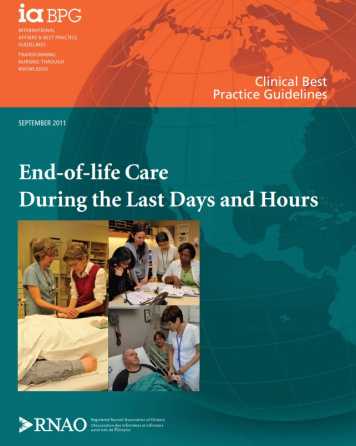
This guideline focuses on recommendations for adults, aged 18 years and older, who have reached the part of the illness trajectory that includes the last days and hours of life. This guideline will provide evidence- based recommendations for Registered Nurses and Registered Practical Nurses on best nursing practices for end-of-life care during the last days and hours. Registered Nurses’ Association of Ontario (2011). End-of-life care during the last days and hours. Toronto, ON: Author.
External link
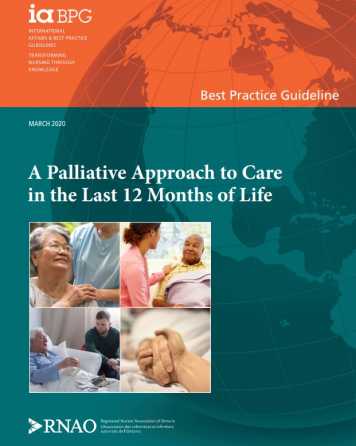
This best practice guideline (BPG) provides evidence-based recommendations to nurses and the interprofessional health team who support adults experiencing the last 12 months of a progressive life-limiting illness, and their families and caregivers.  Registered Nurses’ Association of Ontario. (2020). A Palliative Approach to Care in the Last 12 months of Life. Toronto, ON. Author.  
Document
To facilitate sharing information about prognosis with the patient during end-of-life care discussions, clinicians can use the "SPIKES" process (Setting up, Perception, Invitation, Knowledge, Emotions, and Strategy and Summary). Registered Nurses’ Association of Ontario. (2011). SPIKES: A Six Step Strategy for Delivering Bad News (Baile et al., 2000, p. 305-307) of End-of-Life Care During the Last Days and Hours.Toronto, Canada: Author. p 30.
Document
Individuals have a right t know their options and to have their preferences considered. Supporting individuals who are nearing the end of life requires interprofessional collaboration and problem-solving. Shared decision-maing can help individuals participate in the decision-making process in the ways the prefer and can help to meet their needs. Strategies for health-care providers to help families and individuals with decision making on end-of-care. Registered Nurses’ Association of Ontario (2011). Appendix J of End-of-Life Care During the Last Days and Hours. Toronto, ON: Author. pp. 112-113.
External link
Strengthening a Palliative Approach in LTC (SPA-LTC), website shares tools for a palliative approach that empowers families and staff to provide personalized and high-quality care for LTC residents living with chronic and life-limiting illnesses. This approach provides individuals with a seamless transition from chronic disease management to appropriate end-of-life planning and care. A palliative approach is beneficial at any stage in a chronic illness to maximize comfort and respect a person’s wishes. Copyright © 2020 SPA LTC  
External link
The Gold Standards Framework Proactive Identification Guidance-GSF (PIG), is a guide for clinicians to assist with earlier recognition of decline for patients considered to be in their final year(s) of life. It is used within the Gold Standards Framework (GSF) Quality Improvements Training Programmes to support earlier identification of patients, for better assessment of needs and care planning care in line with their needs and wishes. The PIG can be used to clarify triggers that help to identify patients earlier, so that care can be better planned, more proactive, anticipate patients’ needs and take into account their own wishes following a discussion related to advance care planning. © 2025 The Gold Standards Framework Centre CIO
External link
MAID (medical assistance in dying), is an option during end of life that has substantial consequences for nursing practice. The goal of this toolkit is to facilitate how you may think about MAID as it relates to both your life and your nursing practice. This reflective Guide for Nurses examines six areas of nursing practice in conjunction to Medical Assistance in Dying: nurses’ experiences, making moral sense, best practices, common challenges, and self-care. It includes a video capturing nurses' experiences with MAID and this resources can be used in a group setting or independently.  Please note that this reflective guide was not designed to instruct you about the MAID legislation or the specific policies to guide your practice. To be competent to provide care you will need to familiarize yourself with the MAID legislation, your healthcare region policies, and your professional standards.   Research Team Credit: Barbara Pesut, Sally Thorne, Michael Banwell, Michael Burgess, Kenneth Chambaere, Madeleine Greig, Margaret Hall, Josette Roussel, Catharine J. Schiller, Janet Storch, Carol Tishelman, David Kenneth Wright Funding from Canadian Institutes for Health Research: CIHR Project Grant 
External link
This framework offers guidance on strengthening the current model of palliative care so that individuals receive the right care, from the right provider, at the right time. It focuses on adults living with progressive, life-limiting illnesses who would benefit from palliative care, as well as the supports needed by their families and caregivers. The framework highlights the critical role of education in building palliative care capacity and underscores the importance of ensuring providers have the necessary competencies. April 2019
Document
Ideas to conduct a conference with individuals and families to assist with decision making at end-of-life. Registered Nurses’ Association of Ontario (2011). Appendix H of End-of-Life Care During the Last Days and Hours. Toronto, ON: Author. pp. 109-110.
External link
Ontario Palliative Care Network's Tools to Support Early Identification for Palliative Care. The aim of this document is to support providers and system level leadership in earlier identification of patients who would benefit from palliative care. April 2019  
Document
This pamphlet is helpful in preparing families and caregivers for understanding the final stage of life.   Prepared by Ida Tigchelaar, RN, Palliative Care Pain & Symptom Management/Education Consultant, Oxford & Elgin Counties of Ontario.
External link
The Bereavement Risk Assessment Tool, or BRAT, is a psychosocial assessment tool used by care teams to communicate personal, interpersonal and situational factors that may place a caregiver or family member at greater risk for a significantly negative bereavement experience.
External link
The CHPCA is the national voice for hospice palliative care in Canada. Advancing and advocating for quality end-of-life/hospice palliative care, its work includes public policy, public education and awareness.   © 2024 Canadian Hospice Palliative Care Association.
Document
Figure 2 from, A Palliative Approach to Care in the Last 12 Months of Life, illustrates complex issues that persons and their families may face when receiving palliative care, which are categorized into eight equally important domains. Registered Nurses’ Association of Ontario (2020). A Palliative Approach to Care in the Last 12 months of Life. Toronto, ON: Author.
External link
Figure 2 from, A Palliative Approach to Care in the Last 12 Months of Life, illustrates complex issues that persons and their families may face when receiving palliative care, which are categorized into eight equally important domains. Registered Nurses’ Association of Ontario (2020). A Palliative Approach to Care in the Last 12 months of Life. Toronto, ON: Author.
External link
This section of the brainXchange website focuses on health care consent and advance care planning, with many presentations and resources available to help when caring for persons at the end of life.  © 2025 brainXchange™
External link
This guide is intended to help health care/hospice palliative care professionals and volunteers to have a conversation with and/or respond to patients or their families around Medical Assistance in Dying (MAiD). © 2024 Canadian Hospice Palliative Care Association.
External link
Implementing a Palliative Approach to Care in Long Term Care, is an implementation guide and resource toolkit that aligns with the expanded Palliative Approach to Care requirements within the Fixing Long-Term Care Act, 2021 (FLTCA). The document is divided into 3 sections, each section starts with content related to the section’s theme, followed by a comprehensive list of resources, including hyperlinks. 1. Key concepts in a palliative approach to care 2. Mentorship, education and support to build competency and capacity 3. Implementing a palliative approach to care  
Document
Implementing a Palliative Approach to Care in Long Term Care, is an implementation guide and resource toolkit that aligns with the expanded Palliative Approach to Care requirements within the Fixing Long-Term Care Act, 2021 (FLTCA). The document is divided into 3 sections, each section starts with content related to the section’s theme, followed by a comprehensive list of resources, including hyperlinks. 1. Key concepts in a palliative approach to care 2. Mentorship, education and support to build competency and capacity 3. Implementing a palliative approach to care  
External link
This guideline focuses on recommendations for adults, aged 18 years and older, who have reached the part of the illness trajectory that includes the last days and hours of life. This guideline will provide evidence- based recommendations for Registered Nurses and Registered Practical Nurses on best nursing practices for end-of-life care during the last days and hours. Registered Nurses’ Association of Ontario (2011). End-of-life care during the last days and hours. Toronto, ON: Author.
External link
This best practice guideline (BPG) provides evidence-based recommendations to nurses and the interprofessional health team who support adults experiencing the last 12 months of a progressive life-limiting illness, and their families and caregivers.  Registered Nurses’ Association of Ontario. (2020). A Palliative Approach to Care in the Last 12 months of Life. Toronto, ON. Author.  
Document
To facilitate sharing information about prognosis with the patient during end-of-life care discussions, clinicians can use the "SPIKES" process (Setting up, Perception, Invitation, Knowledge, Emotions, and Strategy and Summary). Registered Nurses’ Association of Ontario. (2011). SPIKES: A Six Step Strategy for Delivering Bad News (Baile et al., 2000, p. 305-307) of End-of-Life Care During the Last Days and Hours.Toronto, Canada: Author. p 30.
External link
The Gold Standards Framework Proactive Identification Guidance-GSF (PIG), is a guide for clinicians to assist with earlier recognition of decline for patients considered to be in their final year(s) of life. It is used within the Gold Standards Framework (GSF) Quality Improvements Training Programmes to support earlier identification of patients, for better assessment of needs and care planning care in line with their needs and wishes. The PIG can be used to clarify triggers that help to identify patients earlier, so that care can be better planned, more proactive, anticipate patients’ needs and take into account their own wishes following a discussion related to advance care planning. © 2025 The Gold Standards Framework Centre CIO
Document
This pamphlet is helpful in preparing families and caregivers for understanding the final stage of life.   Prepared by Ida Tigchelaar, RN, Palliative Care Pain & Symptom Management/Education Consultant, Oxford & Elgin Counties of Ontario.
External link
The brochure contains information to guide those caring for First Nations and Indigenous Peoples related to advanced care planning. Although created in BC, it can be applicable to Ontario residents.  
External link
This Advance Care Planning website helps Ontarians learn about Advance Care Planning (ACP) and includes information about: having a conversations to help people and their substitute-decision-maker (SDM) towards preparing for future healthcare decisions considering what's important to you and how to involve your SDM Ontario law and substitute decision-making  © 2024 Hospice Palliative Care Ontario.   
External link
The CANHELP caregiver questionnaire was designed to evaluate satisfaction with care for older patients with life threatening illnesses, and the family members. A straight forward satisfaction instrument that you can use t rate the quality of care at the programs or organization level. Reference: CARENET Canadian Researchers at the End of Life Network. (n.d.). CANHELP Tool.  The CARENET © 2025
External link
This link provides information and support for professionals on palliative and end-of-life care, loss and grief.  There is a list of clinical tools and useful resources to enhance palliative and end life care.  Copyright 2003-2025 Canadian Virtual Hospice.
External link
Goals of Care discussions help a person living with a life-limiting illness understand the serious nature of their illness. If the person is incapable, the discussions are with their substitute decision-maker. Goals of Care discussions also help healthcare providers to understand the patient’s values and goals for their care. Cancer Care Ontario
External link
This information fact sheet is developed as a supplement to the RNAO Nursing Best Practice Guideline document for nurses. Registered Nurses’ Association of Ontario. (2011).  Care In The Last Days And Hours Of Life.  Toronto, Canada: Author. 
External link
These Indigenous Palliative Care Fact Sheets are developed to support First Nations, Inuit, Métis and urban Indigenous people living with a life-changing illness and their families, caregivers and communities. Cancer Care Ontario. (2013). Palliative Care Toolkit for Indigenous Communities.
External link
On Mar. 17, 2021, the federal government passed Bill C-7 to amend the Criminal Code to expand eligibility for Medical Assistance in Dying (MAID). Use the CNO site to find important updates, information and resources that impact nurses in Ontario on the subject of MAID. © 2025 College of Nurses of Ontario
External link
Residents with severe dementia or other end stage diseases eat less as part of the natural progression of their disease. Research at end of life suggests that as residents eat and drink less they do not suffer from hunger or thirst. This session will focus on “Comfort Feeding Only” (CFO), when oral intake is not sufficient to sustain life, and if prolonging life with artificial hydration is not consistent with the residents' wishes (as expressed by the resident or their substitute decision maker (SDM)). This webinar is intended for long-term care leaders facilitating practice change and direct care staff that will benefit from understanding CFO process and the goal of the feedings to achieve comfort by employing the least invasive and potentially most satisfying way to provide nutrition. During this webinar, participants will: Understand process followed to identify gap, develop policy and implementation of CFO How to have a conversation with resident, family/SDM for comfort feeding only Learn different implementation strategies to initiate CFO Know strategies focusing on safe positioning and swallowing Recognize symptoms such as dry mouth that can be alleviated with minimal oral intake and/or oral care Presented by Dr. Evelyn Williams and Jennifer Wong - Veteran's Centre Sunnybrook Health Sciences Centre in collaboration with Registered Nurses’ Association of Ontario (2017). Comfort Feeding Only(CFO): Managing Feeding at End-of-Life. RNAO You Tube. Retrieved from https://youtu.be/OB_HMSqKcao
External link
Early Identification & Prognostic Guide for Clinicians by Mississauga Halton PCN - This Early Identification and Prognostic Indicator Guide aims to help family physicians, specialist physicians and nurse practitioners in earlier identification of those patients nearing the end of life who could benefit from a palliative care approach to care. Thomas. K et al. Prognostic Indicator Guidance, 4th Edition. The Gold Standards Framework Centre In End of Life Care CIC, 2011. Adaptation of guide completed by Mississauga Halton Regional Hospice Palliative Care Committees with permission from K. Thomas Copyright © 2025 Ontario Health at Home. All rights reserved.
External link
The brainXchange End of Life Care section contains presentation slides and resources on end of life care, including care related to persons in the final stages of dementia.  © 2025 brainXchange™
External link
This brochure prepared by Alzheimer's Association provides support in preparing for the end of life, especially when families must make choices. © 2016 Alzheimer’s Association®
External link
The Cancer Care website links to the guidelines for palliative care. The target population is any individual requiring palliative care. All Clinicians and staff involved in the delivery of palliative care can use this guideline.  
External link
The Advocacy Centre for the Elderly (ACE) website provides various information related to health care consent and advance care planning, frequently asked questions and resources. Copyright © 2025 The Advocacy Centre for the Elderly (ACE).
External link
The Hospice Palliative Care Ontario offers many educational resources for caregivers including Advance Care Planning and Health Care Consent for Health Service Providers. There is also a Palliative Care Core Course for Interdisciplinary staff which covers pain and symptom management, ethical decisions, communication and end of life in dementia. Materials are freely accessible. Copyright © Hospice Palliative Care Ontario 2023
External link
Developed by a Canadian research team who has been funded by the Canadian Institutes for Health Research to explore the ethical, policy, and practice implications of Medical Assistance in Dying for Nurses. As part of our knowledge translation strategy, a Reflective Guide for Nurses that addresses six main areas of nursing practice in relation to Medical Assistance in Dying: nurses’ experiences, making moral sense, best practices, common dilemmas, and self-care. The Reflective Guide includes a video that provides a compelling insight into a few nurses’ experiences with Medical Assistance in Dying. This free guide can be used for individual study or as part of an educational offering. Author: CIHR IRSC, Funding from CIHR: CIHR Project Grant PJT-148655; CIHR Project Grant PJT-169144
External link
Cancer Care Ontario website links to best-practice tools from around the world to support primary care providers in the delivery of palliative care.  Tools are organized according to the 3-step model of best practice: Identify, Assess, and Plan. For resources tailored to support First Nations, Métis and Inuit families and communities, please see Tools for the Journey: Palliative Care in First Nations, Inuit and Métis Communities , a Resource Toolkit, developed by the Aboriginal Cancer Control Unit at Cancer Care Ontario.  
External link
On June 16, 2016, the federal government passed legislation to amend Canada’s Criminal Code and established a federal framework for Medical Assistance in Dying (MAID) for individuals who meet pre-defined eligibility criteria. MAID, as defined by the Government of Canada, refers to: The administering by a medical practitioner or nurse practitioner of a substance to a person, at their request, that causes their death. The prescribing or providing by a medical practitioner or nurse practitioner of a substance to a person, at their request so that they may self-administer the substance, and in doing so, cause their own death. As part of its efforts to implement a consistent approach to the MAID process in Ontario, the Ministry of Health and Long-Term Care (MOHLTC) has engaged the Centre for Effective Practice (CEP) to develop a resource to support clinicians (physicians and nurse practitioners) with the provision of MAID.  Centre for Effective Practice. (2019). Medical Assistance in Dying (MAID): Ontario (rev).
External link
Medical assistance in dying (MAID) has been legal in Canada since 2016. Nurse practitioners, physicians, pharmacists, and “persons aiding practitioners” (including nurses) are permitted to help those who have explicitly requested MAID. Resources: CNA Statement on the Passage of Bill C-14 (media release) Code of Ethics for Registered Nurses Palliative care and end-of-life resources © Copyright 2022 Canadian Nurses Association
External link
This Government of Canada website provides information on what medical assistance in dying (MAID) is, who is eligible, how to make a request, the process, and who can provide medical assistance in dying. Date modified: 2025-08-27      
External link
This quality standard addresses palliative care for adults with a serious illness, and for their family and care partners. It focuses on palliative care in all health settings, for all health disciplines, and in all health sectors. It includes information about general palliative care that applies to all health conditions. © King’s Printer for Ontario, 2024      
External link
Strengthening a Palliative Approach in LTC (SPA-LTC), website shares tools for a palliative approach that empowers families and staff to provide personalized and high-quality care for LTC residents living with chronic and life-limiting illnesses. This approach provides individuals with a seamless transition from chronic disease management to appropriate end-of-life planning and care. A palliative approach is beneficial at any stage in a chronic illness to maximize comfort and respect a person’s wishes. Copyright © 2020 SPA LTC  
External link
MAID (medical assistance in dying), is an option during end of life that has substantial consequences for nursing practice. The goal of this toolkit is to facilitate how you may think about MAID as it relates to both your life and your nursing practice. This reflective Guide for Nurses examines six areas of nursing practice in conjunction to Medical Assistance in Dying: nurses’ experiences, making moral sense, best practices, common challenges, and self-care. It includes a video capturing nurses' experiences with MAID and this resources can be used in a group setting or independently.  Please note that this reflective guide was not designed to instruct you about the MAID legislation or the specific policies to guide your practice. To be competent to provide care you will need to familiarize yourself with the MAID legislation, your healthcare region policies, and your professional standards.   Research Team Credit: Barbara Pesut, Sally Thorne, Michael Banwell, Michael Burgess, Kenneth Chambaere, Madeleine Greig, Margaret Hall, Josette Roussel, Catharine J. Schiller, Janet Storch, Carol Tishelman, David Kenneth Wright Funding from Canadian Institutes for Health Research: CIHR Project Grant 
External link
This framework offers guidance on strengthening the current model of palliative care so that individuals receive the right care, from the right provider, at the right time. It focuses on adults living with progressive, life-limiting illnesses who would benefit from palliative care, as well as the supports needed by their families and caregivers. The framework highlights the critical role of education in building palliative care capacity and underscores the importance of ensuring providers have the necessary competencies. April 2019
External link
Ontario Palliative Care Network's Tools to Support Early Identification for Palliative Care. The aim of this document is to support providers and system level leadership in earlier identification of patients who would benefit from palliative care. April 2019  
Document
A comprehensive, holistic assessment of individuals and their families at end-of-life. Reprinted with Permission from Canadian Hospice Palliative Care Association.  Registered Nurses' Association of Ontario.  (2011). Appendix K of End-of-Life Care During the Last Days and Hours. Toronto, ON: Author.  pp. 114-115. 
Document
Diseases such as chronic obstructive pulmonary disease or congestive heart failure run a more fluctuating course and result in death in a less predictable timeframe than diseases such as renal disease or dementia. Each exacerbation can lead to remission (and future exacerbation) or death; knowing which will occur on any given admission is extremely challenging. General indicators of poorer prognosis (life expectancy of only weeks to many weeks) include poor performance status, impaired nutritional status and a low albumin level. Registered Nurses’ Association of Ontario. (2011). Appendix E of End-of-Life Care During the Last Days and Hours. Toronto, Canada: Author. pp103-105 .
Document
The revised Edmonton Symptom Assessment System (ESAS-r) is available in multiple languages and is designed to assist in the assessment of 10 common symptoms: pain, tiredness, drowsiness, nausea, lack of appetite, shortness of breath, depression, anxiety, well-being and constipation. It conveys the individual’s description of the severity of a symptom based on a scale ranging from 0 to 10.  Registered Nurses’ Association of Ontario. (2011). Appendix F of End-of-Life Care During the Last Days and Hours. Toronto, Canada: Author. pp. 106-107. 
Document
This scale's purpose is to determine how nurses feel about certain situations in which they are involved with patients. All statements concern nursing care given to the dying person and/or his/her family. Where there is a reference to a dying patient, assume it refers to a person who is considered to be terminally ill, with six months or fewer to live. Registered Nurses' Association of Ontario. (2011). Appendix G of End-of-Life Care During the last Days and Hours. Toronto, ON: Author pp. 108-109 Source: Folmelt, K. American Journal Hospice Palliative Care (Vol. 8, Issue 5) pp. 37-43 Copyright 1991 By Sage Publication    
Document
PPI relies on the assessment of performance status using PPS, oral intake, and the presence or absence of dyspnea, edema or delirium. Registered Nurses’ Association of Ontario. (2011). Appendix D of End-of-Life Care During the Last Days and Hours.  Toronto, Canada: Author. p 101.  Copyright (2008), with permission from Elsevier.
Document
PaP uses the Karnofsky Performance Scale (KPS) and 5 other criteria to generate a numerical score from 0 to 17.5 to predict 30 day survival (higher scores predict shorter survival). Registered Nurses’ Association of Ontario. (2011).  Appendix D of End-of-Life Care During the Last Days and Hours. Toronto, Canada: Author. pp. 102-103.  Copyright (1999), with permission from Elsevier. Reprinted from Journal of Pain and Symptom Management, Vol. 17, No. 4, Maltoni, M, Nanni, O, Pirovano, M., Scarpi, E., Indelli, M, Martini, C, et al., Successful Validation of he Palliative Prognostic Score in Terminally ill Cancer Patient, 240-247  
Document
Individuals have a right t know their options and to have their preferences considered. Supporting individuals who are nearing the end of life requires interprofessional collaboration and problem-solving. Shared decision-maing can help individuals participate in the decision-making process in the ways the prefer and can help to meet their needs. Strategies for health-care providers to help families and individuals with decision making on end-of-care. Registered Nurses’ Association of Ontario (2011). Appendix J of End-of-Life Care During the Last Days and Hours. Toronto, ON: Author. pp. 112-113.
Document
Ideas to conduct a conference with individuals and families to assist with decision making at end-of-life. Registered Nurses’ Association of Ontario (2011). Appendix H of End-of-Life Care During the Last Days and Hours. Toronto, ON: Author. pp. 109-110.
Path method
Site section plus slug
Site section
Slug
palliative-and-end-of-life-care

Summary

Resources to guide LTC teams in delivering compassionate, resident- and family-centred care at end of life. Offers tools for symptom management, communication, advance care planning, and staff support. 

Automatic slug from title
Yes