RNAO coaches can help

Through collaborations with LTC homes, our team of coaches work towards improving resident care and promoting positive workplaces by implementing RNAO’s clinical and healthy work environment best practice guidelines.

Contact a coach

Identify where you can improve

Use RNAO's gap (opportunity) analysis tool to help identify where evidence-based best practice recommendations can improve your organization's current practice.

Violence prevention

Provides strategies to prevent, recognize, and respond to workplace violence and aggression. Includes risk assessments, reporting tools, and staff education to foster a healthy working environment.

All resources

External link
This handbook can be used to raise awareness about the prevalence and effects of domestic violence in the workplace. It also provides suggestions on how to address this issue for the employer, supervisor, union, joint health and safety committee/health and safety representative, co-workers and victims. PSHSA - Public Services Health and Safety Association © 2025
External link
This is a link to the Canada Labour Code, which is to be used by organizations under federal jurisdiction. The section that pertains to this guideline is section 125.1 (z.16) under Duties of Employer. Date modified: 2025-11-10
External link
This is a link to the Criminal Code of Canada. The sections that pertain to this guideline are: Section 214 = part VIII Offences Against the Person and Reputation – Assaults: sub section 264.1 and 265. Published by the Minister of Justice. Date modified: 2025-11-10
External link
Domestic Violence Fast Facts, is a quick reference sheet that provides facts about domestic violence, recognizing signs of domestic violence, and suggestions for co-workers and employers. All Material Copyright 2010 © Public Services Health & Safety Association (PSHSA). Public Services Health & Safety Association.
External link
This booklet is for coworkers. It addresses domestic violence that extends to the workplace. It develops awareness and provides supportive tips. It is part of the workplace violence prevention series developed by the Occupational Health and Safety Council of Ontario in partnership with the Ontario Women’s Directorate. PSHSA - Public Services Health and Safety Association © 2025    
External link
This is a joint position statement from The Canadian Nurses Association (CNA) and the Canadian Federation of Nurses Unions (CFNU) on workplace violence and bullying. Copyright ©, Canadian Nurses Association, 2010-2011 all rights reserved.  
External link
This Tips and Tools guide, is designed to help you better understand how to prevent and manage conflict in your work environment. The information is based on the RNAO Healthy Work Environment, Best Practice Guideline: Preventing and Mitigating Conflict in Health-Care Teams.  
External link
This is a link to the Occupational Health and Safety Act (OHSA), which sets out the rules in relation to health and safety in the workplace. Bill 168 is an amendment to this act and is included within the OHSA link under violence and harassment (Part III.0.1).  © King’s Printer for Ontario, 2012-24
External link
A link to the Ontario Human Rights Code R.S.O. 1990, c. H.19, a provincial law that prohibits discrimination and guarantees equal rights in employment, housing, and services. © King’s Printer for Ontario, 2012-24
External link
A summary of the evidence-based system, organizational and team/individual recommendations in the RNAO Preventing and Managing Violence in the Workplace best practice guideline.   Registered Nurses’ Association of Ontario. (2009). 
Document
A tool to assist with comparing your organization’s current practice with evidence-based RNAO best practice recommendations. Registered Nurses Association of Ontario (2022). Opportunity Analysis-Preventing Violence, Harassment and Bullying Against Health Workers. Toronto. ON
External link
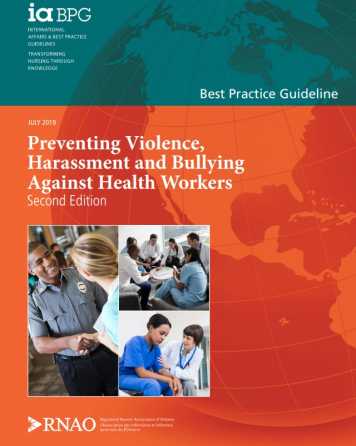
Violence against health workers is already endemic and growing rapidly. To stem and reverse that risk, the Registered Nurses’ Association of Ontario (RNAO) has issued an updated edition of its Workplace Violence, Harassment and Bullying Against Health Workers best practice guideline (BPG). The BPG provides 15 evidence-based recommendations for health service organizations and academic institutions so they can recognize, prevent and manage violence, harassment and bullying in the workplace, changes that will enable nurses and other health professionals to focus even more care on patients. Recommendations focus on: (1) risk assessment tools and strategies; (2) organizational policies, procedures, and responsibilities; and (3) educational approaches and strategies. Registered Nurses’ Association of Ontario. (2019). Preventing violence, harassment and bullying against health workers. Toronto, ON: Author.      
External link
The Workplace Safety Insurance Act (WSIA) provides employees with health-care benefits in the event that they have suffered an injury while at work. Purpose of the Act is to: promote health and safety in workplaces, facilitate the return to work and recovery of workers who sustain personal injury arising out of and in the course of employment or who suffer from an occupational disease, to facilitate the re-entry into the labour market of workers and spouses of deceased workers and, to provide compensation and other benefits to workers and to the survivors of deceased workers © King’s Printer for Ontario, 2012-24
External link
This website has information and documents for workers/employers who have experienced an injury at work. © 2025, Workplace Safety and Insurance Board
External link
Workplace Violence Risk Assessment (WVRAT), can be used to support the Occupational Health and Safety Act (OHSA) recommendation that employers assess and control risks of workplace violence. This needs to be done as often as necessary to ensure that organizational policies and programs continue to protect workers.  © Public Services Health and Safety Association  
External link
The PSHSA Fast Fact provides an overview of existing statutory requirements for workplace violence and harassment under OHSA and the extended obligations arising from legislative changes. This information aims to guide corporate compliance and help employers effectively manage risk in the workplace. PSHSA - Public Services Health and Safety Association © 2025

There are no implementation resources available for this topic.

Education resources

External link
This handbook can be used to raise awareness about the prevalence and effects of domestic violence in the workplace. It also provides suggestions on how to address this issue for the employer, supervisor, union, joint health and safety committee/health and safety representative, co-workers and victims. PSHSA - Public Services Health and Safety Association © 2025
External link
This is a link to the Canada Labour Code, which is to be used by organizations under federal jurisdiction. The section that pertains to this guideline is section 125.1 (z.16) under Duties of Employer. Date modified: 2025-11-10
External link
This is a link to the Criminal Code of Canada. The sections that pertain to this guideline are: Section 214 = part VIII Offences Against the Person and Reputation – Assaults: sub section 264.1 and 265. Published by the Minister of Justice. Date modified: 2025-11-10
External link
Domestic Violence Fast Facts, is a quick reference sheet that provides facts about domestic violence, recognizing signs of domestic violence, and suggestions for co-workers and employers. All Material Copyright 2010 © Public Services Health & Safety Association (PSHSA). Public Services Health & Safety Association.
External link
This booklet is for coworkers. It addresses domestic violence that extends to the workplace. It develops awareness and provides supportive tips. It is part of the workplace violence prevention series developed by the Occupational Health and Safety Council of Ontario in partnership with the Ontario Women’s Directorate. PSHSA - Public Services Health and Safety Association © 2025    
External link
This is a joint position statement from The Canadian Nurses Association (CNA) and the Canadian Federation of Nurses Unions (CFNU) on workplace violence and bullying. Copyright ©, Canadian Nurses Association, 2010-2011 all rights reserved.  
External link
This Tips and Tools guide, is designed to help you better understand how to prevent and manage conflict in your work environment. The information is based on the RNAO Healthy Work Environment, Best Practice Guideline: Preventing and Mitigating Conflict in Health-Care Teams.  
External link
This is a link to the Occupational Health and Safety Act (OHSA), which sets out the rules in relation to health and safety in the workplace. Bill 168 is an amendment to this act and is included within the OHSA link under violence and harassment (Part III.0.1).  © King’s Printer for Ontario, 2012-24
External link
A link to the Ontario Human Rights Code R.S.O. 1990, c. H.19, a provincial law that prohibits discrimination and guarantees equal rights in employment, housing, and services. © King’s Printer for Ontario, 2012-24
External link
A summary of the evidence-based system, organizational and team/individual recommendations in the RNAO Preventing and Managing Violence in the Workplace best practice guideline.   Registered Nurses’ Association of Ontario. (2009). 
External link
Violence against health workers is already endemic and growing rapidly. To stem and reverse that risk, the Registered Nurses’ Association of Ontario (RNAO) has issued an updated edition of its Workplace Violence, Harassment and Bullying Against Health Workers best practice guideline (BPG). The BPG provides 15 evidence-based recommendations for health service organizations and academic institutions so they can recognize, prevent and manage violence, harassment and bullying in the workplace, changes that will enable nurses and other health professionals to focus even more care on patients. Recommendations focus on: (1) risk assessment tools and strategies; (2) organizational policies, procedures, and responsibilities; and (3) educational approaches and strategies. Registered Nurses’ Association of Ontario. (2019). Preventing violence, harassment and bullying against health workers. Toronto, ON: Author.      
External link
The Workplace Safety Insurance Act (WSIA) provides employees with health-care benefits in the event that they have suffered an injury while at work. Purpose of the Act is to: promote health and safety in workplaces, facilitate the return to work and recovery of workers who sustain personal injury arising out of and in the course of employment or who suffer from an occupational disease, to facilitate the re-entry into the labour market of workers and spouses of deceased workers and, to provide compensation and other benefits to workers and to the survivors of deceased workers © King’s Printer for Ontario, 2012-24
External link
This website has information and documents for workers/employers who have experienced an injury at work. © 2025, Workplace Safety and Insurance Board
External link
Workplace Violence Risk Assessment (WVRAT), can be used to support the Occupational Health and Safety Act (OHSA) recommendation that employers assess and control risks of workplace violence. This needs to be done as often as necessary to ensure that organizational policies and programs continue to protect workers.  © Public Services Health and Safety Association  
External link
The PSHSA Fast Fact provides an overview of existing statutory requirements for workplace violence and harassment under OHSA and the extended obligations arising from legislative changes. This information aims to guide corporate compliance and help employers effectively manage risk in the workplace. PSHSA - Public Services Health and Safety Association © 2025

Evaluation resources

There are no evaluation resources available for this topic.

BPG appendices