All resources
A tool to assist with comparing your organization’s current practice with evidence-based RNAO best practice recommendations.
Registered Nurses Association of Ontario (2022). Opportunity Analysis-Assessment and Care of Adults at Risk for Suicidal Ideation and Behaviour. Toronto, ON.
Website that deals with suicide survivors, suicide grief, support for those living with suicide loss along with providing education materials and access to various support and crisis centers. It also addresses suicide risk in the aging population. Its main purpose is to reduce suicide rate in Canada and minimize the consequences of suicide behaviour.
Reference: Canadian Association of Suicide prevention (CASP), https://suicideprevention.ca/
The CCSMH has developed guidelines including The Assessment and Treatment of Mental Health Issues in Long-Term Care Homes, as well as guidelines on a range of related topics such as Delirium, Depression and Suicide Prevention.
© 2025 Canadian Coalition for Seniors Mental Health.
The Canadian Mental Health Association website offers free resources on mental health, including depression, bipolar disorder, grief and mental illness. Local chapters include important workshops, including Applied Suicide Intervention Skills Training (ASIST).
Reference: Canadian Mental Health Association Website
© 2025 CMHA National
A library of over 50,000 suicide-related items by using a simple search engine within the website.
Copyright: The Centre for Suicide Prevention Web Site is offered to you conditioned on your acceptance without modification of the terms, conditions, and notices contained herein. Your use of the Centre for Suicide Prevention Web Site constitutes your agreement to all such terms, conditions, and notices.
This guide provides detailed guidance for nurses by outlining the expectations for professional practice.
© 2025 College of Nurses of Ontario
This document from Mood Disorders Society of Canada considers a variety of strategies to manage depression in older persons.
Reference: Mood Disorders Society of Canada (n.d.) Depression in Elderly.
A List of educational resources compiled by the development panel as a resource for nurses and their clients in learning more about suicidal ideation and behaviour. This is not intended to be an inclusive listing.
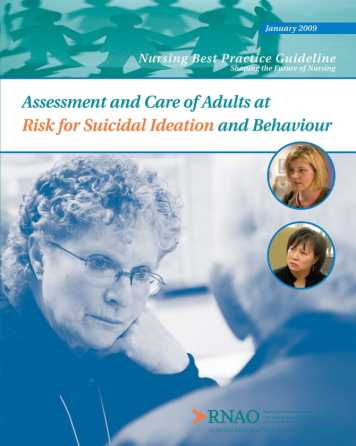
Registered Nurses’ Association of Ontario. (2009). Assessment and Care of Adults at Risk for Suicidal Ideation and Behaviour. Toronto, ON, Canada.
A tool to assist with comparing your organization’s current practice with evidence-based RNAO best practice recommendations.
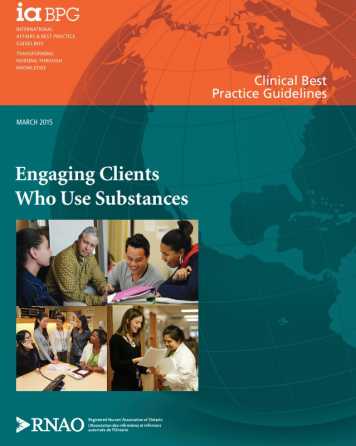
Registered Nurses Association of Ontario (2022). Opportunity Analysis-Engaging Clients Who Use Substances. Toronto, ON.
Baycrest website with educational resources related to understanding Late Life Depression, the signs and symptoms, and risk factors.
© 2025 BAYCREST
This Government of Ontario website contains the Mental Health Act 1990 and Regulation that falls under it.
© King’s Printer for Ontario, 2012-24
This WHO webpage on Mental Health of Older Adults, recognizes dementia and depression in older adults as a global public health issue and identifies interventions.
© 2025 WHO
This website contains many useful resources for understanding depression, bipolar disorder, suicidality. There is an education tab with links to training modules. Useful supportive strategies can be found under the support tab.
© Copyright 2025 | Mood Disorders Society of Canada
The Personality Disorder in Older Adults Capacity Building Package provides evidenced informed educational resources to support capacity building for clinical teams who care for individuals living with personality disorder, and to avoid/reduce compassion fatigue. The educational resources are geared toward point-of-care teams from various sectors. The resources are intended to stimulate critical thinking and enhance practical application strategies.
It meets a growing need in LTC related to the management and provision of care to adults experiencing severe mental illness.
The BSO website is hosted by brainXchange™.
RNAO resource page 105, Appendix M. Listed interventions as potentially beneficial to providing supportive care in postvention. Registered Nurses’ Association of Ontario. (2009). Assessment and Care of Adults at Risk for Suicidal Ideation and Behaviour. Toronto, ON, Canada: Author.
Increase your comfort, confidence and competence in this practice area, in order to enhance safety for your clients and to lower the impact of suicide to society. The goal of this best practice guideline is to provide nurses with recommendations, based on the best available evidence, related to the assessment and care of adults at risk for suicidal ideation and behaviour.
Registered Nurses’ Association of Ontario. (2009). Assessment and Care of Adults at Risk for Suicidal Ideation and Behaviour. Toronto, ON, Canada: Author.
While the primary focus of this guideline is on mental health crises, its application has relevance to all settings and populations who experience developmental, situational, community or environmental crises. It is intended that this guideline will enhance the understanding of crisis intervention and standardize its practice, as well as enhance professional nursing practice. Supplement: 2006.
Registered Nurses’ Association of Ontario. (2013). RNAO Crisis Intervention. Toronto, ON: Author.
This work is funded by the Ontario Ministry of Health and Long-Term Care
Here you'll find information about the RNAO Mental Health and Substance Use Program, resources for crisis support and other resources for knowledge building. These items can be used to enhance evidence-based care and services related to mental health and substance use across all health-care settings.
© 2024 RNAO. All rights reserved.
RNAO resource page 106, Appendix N. Listed potential strategies that offers debriefing for staff involved in the care of a client who has completed suicide.
Registered Nurses’ Association of Ontario. (2009). Assessment and Care of Adults at Risk for Suicidal Ideation and Behaviour. Toronto, ON, Canada: Author.
This clinician pocket card from the Canadian Association of Mental Health (CAMH, 2015), supports assessment resources for the assessment and prevention of suicide in older adults. The Geriatric Suicide Ideation Scale and the Harmful Behaviours Scale mentioned on the clinician pocket-card can be used by health care providers with appropriate training.
A website from Government of Canada about suicide, prevention, risk factors, how to get help. It reviews potential risks, prevention, factors that may increase risk and resources along with overview of federal initiative in suicide prevention.
Date modified: 2025-08-27
Canadian Coalition for Seniors’ Mental Health, Suicide Assessment & Prevention for Older Adults, Life Saving Tools for Health Care Providers.
© 2025 Canadian Coalition for Seniors Mental Health. All Rights Reserved.
The CAMH website provides information about suicide signs and symptoms, causes and risk factors and FAQ's. Additional resource on where to get help in crisis, treatment and support.
Copyright 2025 CAMH
Reviews how to support workplace and colleagues as a result of suicide, along with workplace bullying and strategies to minimize suicide rates.
Center for Suicide Prevention, Canadian Mental Health Association (2017).
A toolkit from Mental Health Commission of Canada, information and access to resources on suicide grief, immediate aftermath, advocacy, information for first nations and capacity building tools.
Reference: Available online: Toolkit for survivors of suicide loss and Postvention professionals; https://www.mentalhealthcommission.ca/English/initiatives/11889/tool-kit...
© (2013) Mental Health Commission of Canada. All rights reserved. All materials (including the organization and presentation of such material) on this Web site (the "Materials") are the property of MHCC and its licensors and may be protected by intellectual property laws including laws relating to copyrights, trade-marks, trade-names, internet domain names and other similar rights. Access and use of this Web site is provided by MHCC to accept identified and agree to the listed Terms of Use; such as the information must only be used for lawful purposes, no interference to the website, visit the terms of use periodically as it is updated regularly.
This WHO website consists of suicide data, prevention videos and the mhGAP (Mental Health Gap Action Programme) Intervention Guide with a module on self-harm/suicide.
© 2025 WHO
Implementation resources
Website that deals with suicide survivors, suicide grief, support for those living with suicide loss along with providing education materials and access to various support and crisis centers. It also addresses suicide risk in the aging population. Its main purpose is to reduce suicide rate in Canada and minimize the consequences of suicide behaviour.
Reference: Canadian Association of Suicide prevention (CASP), https://suicideprevention.ca/
Increase your comfort, confidence and competence in this practice area, in order to enhance safety for your clients and to lower the impact of suicide to society. The goal of this best practice guideline is to provide nurses with recommendations, based on the best available evidence, related to the assessment and care of adults at risk for suicidal ideation and behaviour.
Registered Nurses’ Association of Ontario. (2009). Assessment and Care of Adults at Risk for Suicidal Ideation and Behaviour. Toronto, ON, Canada: Author.
While the primary focus of this guideline is on mental health crises, its application has relevance to all settings and populations who experience developmental, situational, community or environmental crises. It is intended that this guideline will enhance the understanding of crisis intervention and standardize its practice, as well as enhance professional nursing practice. Supplement: 2006.
Registered Nurses’ Association of Ontario. (2013). RNAO Crisis Intervention. Toronto, ON: Author.
This work is funded by the Ontario Ministry of Health and Long-Term Care
This clinician pocket card from the Canadian Association of Mental Health (CAMH, 2015), supports assessment resources for the assessment and prevention of suicide in older adults. The Geriatric Suicide Ideation Scale and the Harmful Behaviours Scale mentioned on the clinician pocket-card can be used by health care providers with appropriate training.
A toolkit from Mental Health Commission of Canada, information and access to resources on suicide grief, immediate aftermath, advocacy, information for first nations and capacity building tools.
Reference: Available online: Toolkit for survivors of suicide loss and Postvention professionals; https://www.mentalhealthcommission.ca/English/initiatives/11889/tool-kit...
© (2013) Mental Health Commission of Canada. All rights reserved. All materials (including the organization and presentation of such material) on this Web site (the "Materials") are the property of MHCC and its licensors and may be protected by intellectual property laws including laws relating to copyrights, trade-marks, trade-names, internet domain names and other similar rights. Access and use of this Web site is provided by MHCC to accept identified and agree to the listed Terms of Use; such as the information must only be used for lawful purposes, no interference to the website, visit the terms of use periodically as it is updated regularly.
Education resources
The CCSMH has developed guidelines including The Assessment and Treatment of Mental Health Issues in Long-Term Care Homes, as well as guidelines on a range of related topics such as Delirium, Depression and Suicide Prevention.
© 2025 Canadian Coalition for Seniors Mental Health.
The Canadian Mental Health Association website offers free resources on mental health, including depression, bipolar disorder, grief and mental illness. Local chapters include important workshops, including Applied Suicide Intervention Skills Training (ASIST).
Reference: Canadian Mental Health Association Website
© 2025 CMHA National
A library of over 50,000 suicide-related items by using a simple search engine within the website.
Copyright: The Centre for Suicide Prevention Web Site is offered to you conditioned on your acceptance without modification of the terms, conditions, and notices contained herein. Your use of the Centre for Suicide Prevention Web Site constitutes your agreement to all such terms, conditions, and notices.
This guide provides detailed guidance for nurses by outlining the expectations for professional practice.
© 2025 College of Nurses of Ontario
This document from Mood Disorders Society of Canada considers a variety of strategies to manage depression in older persons.
Reference: Mood Disorders Society of Canada (n.d.) Depression in Elderly.
Baycrest website with educational resources related to understanding Late Life Depression, the signs and symptoms, and risk factors.
© 2025 BAYCREST
This Government of Ontario website contains the Mental Health Act 1990 and Regulation that falls under it.
© King’s Printer for Ontario, 2012-24
This WHO webpage on Mental Health of Older Adults, recognizes dementia and depression in older adults as a global public health issue and identifies interventions.
© 2025 WHO
This website contains many useful resources for understanding depression, bipolar disorder, suicidality. There is an education tab with links to training modules. Useful supportive strategies can be found under the support tab.
© Copyright 2025 | Mood Disorders Society of Canada
The Personality Disorder in Older Adults Capacity Building Package provides evidenced informed educational resources to support capacity building for clinical teams who care for individuals living with personality disorder, and to avoid/reduce compassion fatigue. The educational resources are geared toward point-of-care teams from various sectors. The resources are intended to stimulate critical thinking and enhance practical application strategies.
It meets a growing need in LTC related to the management and provision of care to adults experiencing severe mental illness.
The BSO website is hosted by brainXchange™.
Here you'll find information about the RNAO Mental Health and Substance Use Program, resources for crisis support and other resources for knowledge building. These items can be used to enhance evidence-based care and services related to mental health and substance use across all health-care settings.
© 2024 RNAO. All rights reserved.
A website from Government of Canada about suicide, prevention, risk factors, how to get help. It reviews potential risks, prevention, factors that may increase risk and resources along with overview of federal initiative in suicide prevention.
Date modified: 2025-08-27
Canadian Coalition for Seniors’ Mental Health, Suicide Assessment & Prevention for Older Adults, Life Saving Tools for Health Care Providers.
© 2025 Canadian Coalition for Seniors Mental Health. All Rights Reserved.
The CAMH website provides information about suicide signs and symptoms, causes and risk factors and FAQ's. Additional resource on where to get help in crisis, treatment and support.
Copyright 2025 CAMH
Reviews how to support workplace and colleagues as a result of suicide, along with workplace bullying and strategies to minimize suicide rates.
Center for Suicide Prevention, Canadian Mental Health Association (2017).
This WHO website consists of suicide data, prevention videos and the mhGAP (Mental Health Gap Action Programme) Intervention Guide with a module on self-harm/suicide.
© 2025 WHO
Evaluation resources
There are no evaluation resources available for this topic.
BPG appendices
A List of educational resources compiled by the development panel as a resource for nurses and their clients in learning more about suicidal ideation and behaviour. This is not intended to be an inclusive listing.
Registered Nurses’ Association of Ontario. (2009). Assessment and Care of Adults at Risk for Suicidal Ideation and Behaviour. Toronto, ON, Canada.
RNAO resource page 105, Appendix M. Listed interventions as potentially beneficial to providing supportive care in postvention. Registered Nurses’ Association of Ontario. (2009). Assessment and Care of Adults at Risk for Suicidal Ideation and Behaviour. Toronto, ON, Canada: Author.
RNAO resource page 106, Appendix N. Listed potential strategies that offers debriefing for staff involved in the care of a client who has completed suicide.
Registered Nurses’ Association of Ontario. (2009). Assessment and Care of Adults at Risk for Suicidal Ideation and Behaviour. Toronto, ON, Canada: Author.