

Professionalism
Guides nursing staff in upholding professional standards, ethical practice, and accountability. Includes reflective tools and resources to support professional growth and consistent, quality care.
Related Guideline
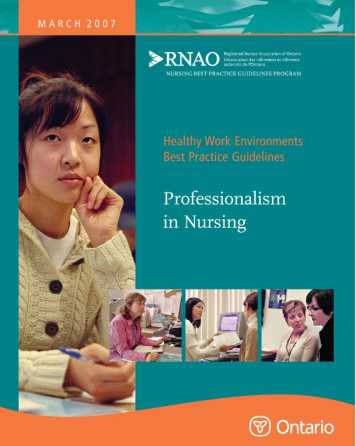
Professionalism in Nursing
The purpose of this best practice guideline (BPG) is: to identify the concept of professionalism as a guiding tenet that enhances outcomes for nurses, patients, organizations and systems; to define the attributes of professionalism; to identify and discuss the evidence related to each attribute of professionalism; and to provide strategies for success.
All resources
 External link
This article provides 30 examples of how to demonstrate professionalism in nursing.
Copyright © 2022 Nursingprocess.org
External linkThe website of the College of Nurses of Ontario provides Information about the requirements and process of becoming a Registered Nurse, Registered Practical Nurse and Nurse Practitioner practising within Ontario for Ontario applicants, Canadian Applicants, International applicants and for nurses to enter CNO's Extended Class.
© 2025 College of Nurses of Ontario
External linkCanadian Nurse Protective Society is a not-for-profit society that offers legal advice, risk-management services, legal assistance and professional liability protection related to nursing practice in Canada.
© 2025 Canadian Nurses Protective Society
 Document
Scope of practice refers to a range of activities that nurses’ have the legislated authority to perform. This standard expands on the accountabilities found in the Code of Conduct (the Code), the central practice standard for nurses. Nurses are expected to practice in compliance with relevant legislation, the Code and all other CNO practice standards.
Copyright © College of Nurses of Ontario, 2025
External linkThe College of Nurses of Ontario's (CNO) Quality Assurance Program (QA) offers nurses an opportunity to self-assess their nursing practice every year. This includes reflecting on current practice, identifying learning needs, and completing a learning plan which clearly outlines activities to improve competence.
© 2025 College of Nurses of Ontario
External linkThe College's Consent practice guideline provides an overview of the major features of the relevant legislation, pertinent definitions and the steps that nurses need to take to obtain consent.
© 2025 College of Nurses of Ontario
External linkA webcast that reviews the standards for documentation outlined by the College of Nurses of Ontario.
© 2025 College of Nurses of Ontario
DocumentThe Canadian Nurses Association-Code of Ethics for Nurses, is an ethical framework applying to all categories of nurses (licensed and registered practical nurses, nurse practitioners, registered nurses, and registered psychiatric nurses).
This updated Code emphasizes several new key areas, including: reconciliation and anti-racism, nurse well-being, contemporary challenges, leadership ad modernized language.
© Copyright 2025 Canadian Nurses Association
External linkThis webinar provides information to assist nurses who have been selected for a Guided Reflection meeting, as part of the College's Professional Conduct process. Nurses learn how to prepare for the meeting with College staff, and what will happen when they come to the College for the meeting.
© 2025 College of Nurses of Ontario
External linkPractice reflection: Learning from practice, is a video emphasizing the importance of self-reflection in every nurse’s practice; facilitated by past Executive Director of the College of Nurses of Ontario Anne Coghlan.
© 2025 College of Nurses of Ontario
External linkThis CNO webcast on the Medication practice standard, is a short, principle-based document that uses common nursing principles to guide the nurses' medication practice.
© 2025 College of Nurses of Ontario
External linkThe Nurse Practitioner practice standard outlines the accountabilities specific to Nurse Practitioners (NPs) in Ontario, also referred to as Registered Nurses in the Extended Class. NPs are also responsible for adhering to all relevant legislation, as well as other applicable CNO standards and guidelines.
© College of Nurses of Ontario, 2025
DocumentA tool to assist with comparing your organization’s current practice with evidence-based RNAO best practice recommendations.
Registered Nurses Association of Ontario (2022). Opportunity Analysis- Professionalism in Nursing. Toronto, ON.
External linkExplains the College of Nurses of Ontario reporting guide for registered nurses including what to report, what should be included in the report, legal obligations and what the CNO does with the report.
© 2025 College of Nurses of Ontario
External linkThis guideline identifies best practices to enable, enhance and sustain teamwork and interprofessional collaboration, and to enhance positive outcomes for patients/clients, systems and organizations. It is based on the best available evidence; where evidence was limited, the recommendations were based on the consensus of expert opinion.
Registered Nurses’ Association of Ontario. (2013). Developing and sustaining interprofessional health care: Optimizing patients/clients, organizational, and systems outcomes. Toronto, ON: Author.
External linkGain an overview of the most compelling evidence about diversity; understanding it, accepting the differences it brings to work settings, and finally, to seeking and embracing diversity.
This panel has been developing guidelines that recommend a congruent set of work place behaviours, management practices and institutional policies within a practice setting resulting in an organizational environment that is respectful and inclusive of cultural and other forms of diversity.
Registered Nurses’ Association of Ontario. (2007). Embracing cultural diversity in health care: Developing cultural competence. Toronto, ON: Author.
External link The goal of this best practice guideline is to strengthen collaborative practice among nurses, because effective collaborative practice is essential for working in health-care organizations. In this guideline, we focus on collaborative practice amongst three types of nursing professionals – registered nurse (RN), registered practical nurse (RPN) and nurse practitioner (NP) – and explore what fosters healthy work environments for them, aware that collaboration must align with the needs of the patient or client. This best practice guideline was developed to assist nurses, nursing leaders, other health professionals and senior managers to enhance positive outcomes for patients/clients (individual/family/group/community), nurses, and the organization through intra-professional collaborative practice. This guideline was based on the best available evidence and where evidence was limited, the best practice recommendations were based on the consensus of expert opinion. This guideline identifies:
best practices for intra-professional practice; and
the organizational culture, values and relationships, and the structures and processes required, for developing and sustaining effective intra-professional nursing practice among nurses
Registered Nurses’ Association of Ontario. (2016). Intra-professional collaborative practice among nurses. Toronto, ON, Canada: Author.
External linkCette ligne directrice sur les pratiques exemplaires en soins infirmières et infirmiers est un document détaillé comportant les ressources nécessaires au soutien de la pratique basée sur des données probantes. Un milieu de travail sain, c’est un milieu de pratique qui maximise la santé et le bien-être des infirmières, des résultats de qualité chez le patient ou client, le rendement de l’organisation et du système, et les retombées sociales, y compris des collectivités en meilleure santé.
Association des infirmières et infirmiers autorisés de l’Ontario. (2013). Lignes directrices sur le développement et le maintien du leadership infirmier (2em Ed). Toronto, ON, Canada: Auteur.
External linkThis Best Practice Guideline (BPG) focuses on professionalism, which is essential for healthy work environments for nurses. A healthy work environment for nurses is a practice setting that maximizes the health and well being of nurses, quality patient outcomes and organizational performance. Professionalism in nursing is an essential ingredient in achieving a healthy work environment and is enabled by the context of practice.
Registered Nurses’ Association of Ontario. (2007). Professionalism in nursing. Toronto, ON, Canada: Author.
External linkGain knowledge in leadership practices that result in healthy outcomes for nurses, patients/clients, organizations and systems. This guideline addresses:
System resources that support effective leadership practices and behaviours for formal leaders and nurses at the point of care
Organizational culture, values and resources that support effective leadership practices and behaviours at all levels
Personal resources that support effective leadership practices across the continuum of care
Anticipated outcomes of effective nursing leadership
This guideline provides evidence-based recommendations for RNs and RPNs on best nursing practices for developing and sustaining nursing leadership.
Registered Nurses’ Association of Ontario. (2013). Developing and sustaining nursing leadership Best Practice Guideline (2nd Ed.). Toronto, ON, Canada: Author.
External linkThis Best Practice Guideline focuses on nursing teams and processes that foster healthy work environments. The focus for the development of this guideline was managing conflict among nursing and healthcare teams with the view that while some conflict is preventable, healthy conflict can also be beneficial.
The BPG was developed to assist nurses in all roles and all settings, other health professionals and management teams to enhance positive outcomes for patients/clients, nurses and Health-care teams, and the organization itself.
Registered Nurses’ Association of Ontario. (2012). Managing and mitigating conflict in health-care teams. Toronto, ON: Author.
DocumentThis resource summarizes the eight professional attributes in nursing.
Registered Nurses’ Association of Ontario. (2007, March). Professionalism in Nursing. Toronto, ON, Canada: Author. pp. 26-27.
External linkThe Value of Reflective Practice on the College of Nurses website, has a short video profiling different nurses discussing reflective practice and getting feedback about their practice. The clip highlights questions nurses can ask themselves and how they can get feedback from their peers.
© 2025 College of Nurses of Ontario
Implementation resources
External link The goal of this best practice guideline is to strengthen collaborative practice among nurses, because effective collaborative practice is essential for working in health-care organizations. In this guideline, we focus on collaborative practice amongst three types of nursing professionals – registered nurse (RN), registered practical nurse (RPN) and nurse practitioner (NP) – and explore what fosters healthy work environments for them, aware that collaboration must align with the needs of the patient or client. This best practice guideline was developed to assist nurses, nursing leaders, other health professionals and senior managers to enhance positive outcomes for patients/clients (individual/family/group/community), nurses, and the organization through intra-professional collaborative practice. This guideline was based on the best available evidence and where evidence was limited, the best practice recommendations were based on the consensus of expert opinion. This guideline identifies:
best practices for intra-professional practice; and
the organizational culture, values and relationships, and the structures and processes required, for developing and sustaining effective intra-professional nursing practice among nurses
Registered Nurses’ Association of Ontario. (2016). Intra-professional collaborative practice among nurses. Toronto, ON, Canada: Author.
DocumentThis resource summarizes the eight professional attributes in nursing.
Registered Nurses’ Association of Ontario. (2007, March). Professionalism in Nursing. Toronto, ON, Canada: Author. pp. 26-27.
Education resources
External linkThis article provides 30 examples of how to demonstrate professionalism in nursing.
Copyright © 2022 Nursingprocess.org
External linkThe website of the College of Nurses of Ontario provides Information about the requirements and process of becoming a Registered Nurse, Registered Practical Nurse and Nurse Practitioner practising within Ontario for Ontario applicants, Canadian Applicants, International applicants and for nurses to enter CNO's Extended Class.
© 2025 College of Nurses of Ontario
External linkCanadian Nurse Protective Society is a not-for-profit society that offers legal advice, risk-management services, legal assistance and professional liability protection related to nursing practice in Canada.
© 2025 Canadian Nurses Protective Society
DocumentScope of practice refers to a range of activities that nurses’ have the legislated authority to perform. This standard expands on the accountabilities found in the Code of Conduct (the Code), the central practice standard for nurses. Nurses are expected to practice in compliance with relevant legislation, the Code and all other CNO practice standards.
Copyright © College of Nurses of Ontario, 2025
External linkThe College of Nurses of Ontario's (CNO) Quality Assurance Program (QA) offers nurses an opportunity to self-assess their nursing practice every year. This includes reflecting on current practice, identifying learning needs, and completing a learning plan which clearly outlines activities to improve competence.
© 2025 College of Nurses of Ontario
External linkThe College's Consent practice guideline provides an overview of the major features of the relevant legislation, pertinent definitions and the steps that nurses need to take to obtain consent.
© 2025 College of Nurses of Ontario
External linkA webcast that reviews the standards for documentation outlined by the College of Nurses of Ontario.
© 2025 College of Nurses of Ontario
DocumentThe Canadian Nurses Association-Code of Ethics for Nurses, is an ethical framework applying to all categories of nurses (licensed and registered practical nurses, nurse practitioners, registered nurses, and registered psychiatric nurses).
This updated Code emphasizes several new key areas, including: reconciliation and anti-racism, nurse well-being, contemporary challenges, leadership ad modernized language.
© Copyright 2025 Canadian Nurses Association
External linkThis webinar provides information to assist nurses who have been selected for a Guided Reflection meeting, as part of the College's Professional Conduct process. Nurses learn how to prepare for the meeting with College staff, and what will happen when they come to the College for the meeting.
© 2025 College of Nurses of Ontario
External linkPractice reflection: Learning from practice, is a video emphasizing the importance of self-reflection in every nurse’s practice; facilitated by past Executive Director of the College of Nurses of Ontario Anne Coghlan.
© 2025 College of Nurses of Ontario
External linkThis CNO webcast on the Medication practice standard, is a short, principle-based document that uses common nursing principles to guide the nurses' medication practice.
© 2025 College of Nurses of Ontario
External linkThe Nurse Practitioner practice standard outlines the accountabilities specific to Nurse Practitioners (NPs) in Ontario, also referred to as Registered Nurses in the Extended Class. NPs are also responsible for adhering to all relevant legislation, as well as other applicable CNO standards and guidelines.
© College of Nurses of Ontario, 2025
External linkThis guideline identifies best practices to enable, enhance and sustain teamwork and interprofessional collaboration, and to enhance positive outcomes for patients/clients, systems and organizations. It is based on the best available evidence; where evidence was limited, the recommendations were based on the consensus of expert opinion.
Registered Nurses’ Association of Ontario. (2013). Developing and sustaining interprofessional health care: Optimizing patients/clients, organizational, and systems outcomes. Toronto, ON: Author.
External linkGain an overview of the most compelling evidence about diversity; understanding it, accepting the differences it brings to work settings, and finally, to seeking and embracing diversity.
This panel has been developing guidelines that recommend a congruent set of work place behaviours, management practices and institutional policies within a practice setting resulting in an organizational environment that is respectful and inclusive of cultural and other forms of diversity.
Registered Nurses’ Association of Ontario. (2007). Embracing cultural diversity in health care: Developing cultural competence. Toronto, ON: Author.
External linkCette ligne directrice sur les pratiques exemplaires en soins infirmières et infirmiers est un document détaillé comportant les ressources nécessaires au soutien de la pratique basée sur des données probantes. Un milieu de travail sain, c’est un milieu de pratique qui maximise la santé et le bien-être des infirmières, des résultats de qualité chez le patient ou client, le rendement de l’organisation et du système, et les retombées sociales, y compris des collectivités en meilleure santé.
Association des infirmières et infirmiers autorisés de l’Ontario. (2013). Lignes directrices sur le développement et le maintien du leadership infirmier (2em Ed). Toronto, ON, Canada: Auteur.
External linkThis Best Practice Guideline (BPG) focuses on professionalism, which is essential for healthy work environments for nurses. A healthy work environment for nurses is a practice setting that maximizes the health and well being of nurses, quality patient outcomes and organizational performance. Professionalism in nursing is an essential ingredient in achieving a healthy work environment and is enabled by the context of practice.
Registered Nurses’ Association of Ontario. (2007). Professionalism in nursing. Toronto, ON, Canada: Author.
External linkGain knowledge in leadership practices that result in healthy outcomes for nurses, patients/clients, organizations and systems. This guideline addresses:
System resources that support effective leadership practices and behaviours for formal leaders and nurses at the point of care
Organizational culture, values and resources that support effective leadership practices and behaviours at all levels
Personal resources that support effective leadership practices across the continuum of care
Anticipated outcomes of effective nursing leadership
This guideline provides evidence-based recommendations for RNs and RPNs on best nursing practices for developing and sustaining nursing leadership.
Registered Nurses’ Association of Ontario. (2013). Developing and sustaining nursing leadership Best Practice Guideline (2nd Ed.). Toronto, ON, Canada: Author.
External linkThis Best Practice Guideline focuses on nursing teams and processes that foster healthy work environments. The focus for the development of this guideline was managing conflict among nursing and healthcare teams with the view that while some conflict is preventable, healthy conflict can also be beneficial.
The BPG was developed to assist nurses in all roles and all settings, other health professionals and management teams to enhance positive outcomes for patients/clients, nurses and Health-care teams, and the organization itself.
Registered Nurses’ Association of Ontario. (2012). Managing and mitigating conflict in health-care teams. Toronto, ON: Author.
External linkThe Value of Reflective Practice on the College of Nurses website, has a short video profiling different nurses discussing reflective practice and getting feedback about their practice. The clip highlights questions nurses can ask themselves and how they can get feedback from their peers.
© 2025 College of Nurses of Ontario
Evaluation resources
Evaluation resources
External linkExplains the College of Nurses of Ontario reporting guide for registered nurses including what to report, what should be included in the report, legal obligations and what the CNO does with the report.
© 2025 College of Nurses of Ontario
