

Delirium, dementia and depression and responsive behaviours
Provides guidance for assessing and managing delirium, dementia, and depression in LTC residents. Features screening tools, care strategies, and educational content to enhance mental health care.
Related Guideline
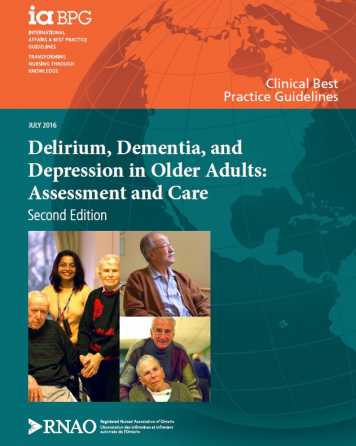
Delirium, Dementia, and Depression in Older Adults: Assessment and Care
This best practice guidelines (BPG) outlines recommendations for the assessment and care of delirium, dementia and depression in older adults. The focus is on the provision of effective, compassionate and dignified care, and on managing any presenting signs, symptoms or behaviours.
Related Guideline
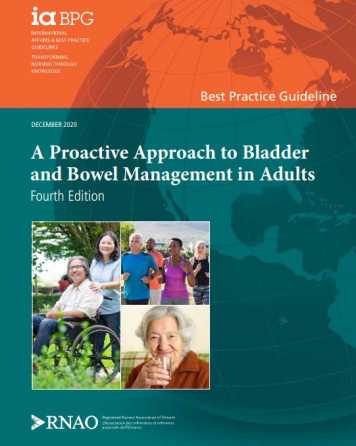
A Proactive Approach to Bladder and Bowel Management in Adults
This best practice guideline (BPG) focuses on bladder and bowel management in adults (aged 18 years and older).
All resources
 External link
The case study and its accompanying discussion guide were developed for educational purposes in long-term care homes to promote use of the RNAO Delirium, Dementia, and Depression in Older Adults: Assessment and Care BPG. This resource provides the necessary instructions to hold a facilitated discussion with long-term care staff. Overall goals of the case study and discussion guide are to:
Actively engage participants in discussions about delirium, dementia, and depression
Help long-term care staff identify the differences between delirium, dementia, and depression
Help long-term care staff become familiar with key resources they can use at the point-of-care to support identification of delirium, dementia, and depression
Reinforce best practices for the care of delirium, dementia, depression in older adults
Reference: Registered Nurses’ Association of Ontario. (2017). Delirium, Dementia, and Depression in Older Adults: Assessment and Care. Toronto, ON, Canada: Author.
External linkThe 4AT is a validated rapid assessment test for delirium and cognitive impairment. It is widely used in routine clinical practice in the UK and internationally. It is free for download and use.
Reference: MacLullich, A., Ryan, T. and Cash, H. (2014). 4AT Rapid Assessment Test for Delirium.
External linkThis heart-warming video shows how music can transform the life of a resident with dementia.
Reference: Sundance Film Festival. (2014, January 7) Alive Inside: A Story of Music & Memory Featurette - Documentary HD.
External linkThis Alzheimer Canada website section provides resources for health care professionals. Ambiguous Grief and Loss, Pain, End of Life and Culture Change, is a resource that addresses the issue of loss and grief while supporting those living with dementia and their caregivers.
©2024 Alzheimer Society of Canada. All rights reserved.
External linkThe Alzheimer Society of Canada provides support to families and clients affected by Alzheimer’s disease. Links are provided to a chapter near you. The website is also available in French.
©2025 Alzheimer Society of Canada
External linkAnxiety symptoms are extremely common. In the primary care setting, a major task is to determine whether the symptoms are a reaction to a distressing situation, indications of an anxiety or other psychiatric disorder such as depression, or signs of a non-psychiatric condition. This resource provides clinical tools for screening, assessment, diagnosis, and treatment.
Copyright 2025 CAMH
 Document
This table from Appendix K pages 152-153 of the BPG Delirium, Dementia and Depression in Older Adults: Assessment and Care (2016) helps us reflect on our own attitudes, skills and knowledge about dementia and provides tips for successful interpersonal skills with residents with dementia.
Registered Nurses’ Association of Ontario. (2016). Delirium, Dementia, and Depression in Older Adults: Assessment and Care. Toronto, ON, Canada: Author.
DocumentThis tip sheet from Smart Tips for Stroke Care highlights key considerations for supporting individuals experiencing changes in behaviour after a stroke.
Smart Tips for Stroke Care (2023) was created by members of the Regional Stroke Networks of Ontario.
External linkThis tip sheet from Smart Tips for Stroke Care highlights key considerations for supporting individuals experiencing changes in behaviour after a stroke.
Smart Tips for Stroke Care (2023) was created by members of the Regional Stroke Networks of Ontario.
External linkThe Behavioural Supports Ontario - Dementia Observation System, BSO-DOS© is an observational tool that helps to identify patterns of behaviour for care planning purposes. It is based on the former DOS. Simple registration is required to access this free tool. A user guide and resource manual are available.
Behavioural Supports Ontario. (2019)
External linkBehavioural Supports Ontario person-centred language initiative report. This report provides rationale for using person-centred care language and helpful strategies for changing practice.
Behavioural Supports Ontario. (October, 2018)
External linkThe brainXchange™ provides resources to support improving the quality of life for persons with, or at risk of having brain-health needs related to dementia, mental health and neurological conditions related to brain health changes or aging.
© 2024 brainXchange™
DocumentThis tip sheet from Smart Tips for Stroke Care highlights key considerations for supporting individuals experiencing changes in cognition after a stroke.
Smart Tips for Stroke Care (2023) was created by members of the Regional Stroke Networks of Ontario.
External linkThis tip sheet from Smart Tips for Stroke Care highlights key considerations for supporting individuals experiencing changes in cognition after a stroke.
Smart Tips for Stroke Care (2023) was created by members of the Regional Stroke Networks of Ontario.
DocumentThis helpful table from Appendix D (page 127) of the BPG Delirium, Dementia and Depression in Older Adults: Assessment and Care (2016) helps to distinguish among delirium, dementia and depression where features are often similar or overlapping.
Registered Nurses’ Association of Ontario. (2016). Delirium, Dementia, and Depression in Older Adults: Assessment and Care. Toronto, ON, Canada: Author.
External linkThis resource from Alzheimer Society Canada shares how dementia can affect intimacy and sexuality and includes strategies for caregivers. There is also a section to support LGBTQ persons with dementia.
Alzheimer Society of Canada (2018).
DocumentAppendix G from pages 133-134 of Delirium, Dementia and Depression in Older Adults: Assessment and Care (2016) identifies risk factors and related interventions for delirium.
Registered Nurses’ Association of Ontario. (2016). Delirium, Dementia, and Depression in Older Adults: Assessment and Care. Toronto, ON, Canada: Author.
DocumentA tool to assist with comparing your organization’s current practice with evidence-based RNAO best practice recommendations.
Registered Nurses Association of Ontario (2022). Opportunity Analysis-Delirium, Dementia and Depression in Older Adults . Toronto, ON.
External linkIndigenous Cognitive and Aging Awareness Research Exchange (I-CAARE) offers a number of factsheets, a health wheel and pathway for persons with dementia and their caregivers. The indigenous perspective may provide added support and comfort to families as they journey through dementia.
Reference: Indigenous Cognitive and Aging Awareness Research Exchange (2023). Dementia Factsheets.
© 2023 ICARE Owned by Dr. Kristen Jacklin
DocumentThis tip sheet from Smart Tips for Stroke Care highlights key considerations for supporting individuals experiencing depression after a stroke.
Smart Tips for Stroke Care (2023) was created by members of the Regional Stroke Networks of Ontario.
External linkThis tip sheet from Smart Tips for Stroke Care highlights key considerations for supporting individuals experiencing depression after a stroke.
Smart Tips for Stroke Care (2023) was created by members of the Regional Stroke Networks of Ontario.
DocumentThis resource from pages 94-98 of Delirium, Dementia and Depression in Older Adults: Assessment and Care (2016) includes structure, process and outcome indicators helpful in evaluating the changes made by an organization.
Registered Nurses’ Association of Ontario. (2016). Delirium, Dementia, and Depression in Older Adults: Assessment and Care. Toronto, ON, Canada: Author.
External linkAlzheimer Society Ontario's Finding Your Way® helps people living with dementia, their families, caregivers and communities to recognize the risk of going missing, be prepared for incidents of going missing, and ensure that people with dementia can live safely in the community. At this link you will find free On-line Learning about keeping people with dementia safe. You will also find a Living Safely with Dementia Resource Guide and an interactive resource guide.
© 2025 Alzheimer Society of Canada
DocumentThis flow chart from page 33 of the BPG Delirium, Dementia and Depression in Older Adults: Assessment and Care (2016) provides a concise and systematic overview of the best practice recommendations.
Registered Nurses’ Association of Ontario. (2016). Delirium, Dementia, and Depression in Older Adults: Assessment and Care. Toronto, ON, Canada: Author.
External linkThe Geriatric Depression Scale (long form), is a screening tool used to assessment depression in older adults. It is available in both long form and short form versions and also in multiple languages.
Yesavage JA, Brink TL, Rose TL, et al. Development and validation of a geriatric depression screening scale: a preliminary report. J Psychiatr Res 1983; 17:37-49
External linkThe Geriatric Depression Scale (short form), is a screening tool used to assessment depression in older adults. It is available in both long form and short form versions and also in multiple languages.
Reference: Yesavage JA, Brink TL, Rose TL, et al. Development and validation of a geriatric depression screening scale: a preliminary report. J Psychiatr Res 1983; 17:37-49.
DocumentThis table from page 76-77 of the Delirium, Dementia, Depression in Older Adults: Assessment and Care BPG (2016) reviews interventions for depression, including psychotherapy, psychological/social and antidepressants.
Registered Nurses’ Association of Ontario. (2016). Delirium, Dementia, and Depression in Older Adults: Assessment and Care. Toronto, ON, Canada: Author.
External linkThis website by Baycrest, provides six sections of learning including- understanding late-life depression, signs and symptoms, self-check, causes, stigmas, types and treatments for late-life depression.
© 2025 BAYCREST - ALL RIGHTS RESERVED.
External linkThe Mini-Cog is a brief screening instrument to determine memory recall and clock drawing ability. A positive screen would suggest more in-depth assessment for cognitive impairment. Mini-Cog instrument, instructions and scoring are provided.
© 2025 Mini-Cog©.
External linkUsing cognitive screening tools can be key for early diagnoses and developing treatment plans to improve brain health and well-being. MoCA is a useful tool for assessing early stage dementia.
Copyright @ 2025 MoCA Test Inc.
External linkMusic and Memory looks at how music can enrich the lives of long-term care residents with cognitive impairment.
©Laurie Blanchard, August, 2016.
External linkNational Initiative for the Care of the Elderly (NICE) is an international network of researchers, practitioners, and students dedicated to improving the care of older adults in Canada and abroad. The website includes various resources, some specific to dementia care and caregiving.
NICE provides online resources based on 20 years of research into the challenges of aging.
@2024 NICE
DocumentThis Table from page 61 of Delirium, Dementia and Depression in Older Adults: Assessment and Care (2016) describes non- pharmacological approaches to use to minimize behavioural and psychological symptoms of dementia.
Registered Nurses’ Association of Ontario. (2016). Delirium, Dementia, and Depression in Older Adults: Assessment and Care. Toronto, ON, Canada: Author.
External linkThe Office of the Public Guardian and Trustee (“OPGT”) delivers a unique and diverse range of services that safeguard the legal, personal and financial interests of certain private individuals and estates. Services are provided by multi-disciplinary teams of dedicated staff with experience in the health care, social work and financial planning fields. They receive professional support from lawyers, accountants and investigators. A brief description of many of the services offered by the OPGT is set out in the website.
© King’s Printer for Ontario, 2012–to25
External linkThis website provides information and resources about the P.I.E.C.E.S.™ program (Physical, Intellectual, Emotional, Capabilities, Environment, Social).
External linkThe Parkinson Canada website contains useful resources for LTC including a Guide to the Non-Motor Symptoms of Parkinson's Disease (client and physician versions). The guide covers cognitive dysfunction, dementia, anxiety, depression, delusions and impulse control in Parkinson's disease. Also available is a booklet specific to the LTC sector as well as a medication booklet.
©Copyright 2025 Parkinson Canada.
External linkPartnerships in Dementia Care Alliance (PiDC) helps to change culture in long-term care and community settings to enhance dementia care. Examples of culture change in LTC homes is included.
©2025 All rights reserved
External linkDelirium resources for healthcare providers. Includes posters, communication tips, clinician learning series slide deck, delirium prevention toolkit, how to prevent and support delirium in older adults, Ontario's delirium quality standard, pocket guide for PSWs, and various handouts.
© 2022 Regional Geriatric Program of Toronto.
DocumentThis table from page 71 of the Delirium, Dementia, and Depression in Older Adults: Assessment and Care BPG (2016) looks at predisposing and precipitating risk factors as well as signs of depression.
Registered Nurses’ Association of Ontario. (2016). Delirium, Dementia, and Depression in Older Adults: Assessment and Care. Toronto, ON, Canada: Author.
External linkThis nursing Best Practice Guideline (BPG) is intended to replace the RNAO (2010) BPGs Screening for Delirium, Dementia and Depression in Older Adults and Caregiving Strategies for Older Adults with Delirium, Dementia and Depression. It is to be used by nurses and other members of the interprofessional health-care team to enhance the quality of their practice pertaining to delirium, dementia, and depression in older adults, ultimately optimizing clinical outcomes through the use of evidence-based practices.
Registered Nurses’ Association of Ontario. (2016). Delirium, Dementia, and Depression in Older Adults: Assessment and Care. Toronto, ON, Canada: Author.
External linkThe Senior Friendly 7 Toolkit supports clinical best practices for healthcare providers across the sectors of care and includes self-management tools for older adults and their caregivers. SF7 focuses on: delirium, mobility, social engagement, continence, pain, nutrition, and polypharmacy.
© 2025 Regional Geriatric Program of Toronto.
External linkCAMH webpage notes risk factors and screening tools for SIGECAPS, a mnemonic used to list the symptoms of major depressive disorder, according to the DSM-5.
Copyright 2025 CAMH
External linkThis poster from the Regional Geriatric Program of Toronto reveals 6 proven strategies to prevent and manage delirium.
© 2019 Regional Geriatric Program of Toronto.
External linkCette affiche du Regional Geriatric Program de Toronto nous donne 6 stratégies éprouvées pour prévenir et soutener le délire.
© 2019 Regional Geriatric Program of Toronto.
External linkThis Government of Ontario website contains the Substitute Decisions Act and Regulations that fall under it.
Reference: Substitute Decisions Act 1992 Website: https://www.ontario.ca/laws/statute/92s30
© King’s Printer for Ontario, 2012-24
DocumentThis table from Delirium, Dementia, and Depression in Older Adults: Assessment and Care BPG (2016) pages 83-84, suggest educational programs for nurses and others caring for clients with delirium, dementia and depression.
Registered Nurses’ Association of Ontario. (2016). Delirium, Dementia, and Depression in Older Adults: Assessment and Care. Toronto, ON, Canada: Author.
External linkThe Confusion Assessment Method (CAM) is a standardized evidence-based tool that enables non-psychiatrically trained clinicians to identify and recognize delirium quickly and accurately in both clinical and research settings. The CAM includes four features found to have the greatest ability to distinguish delirium from other types of cognitive impairment.
The Hartford Institute for Geriatric Nursing, 2019. Donna McCabe, DNP, APRN-BC, GNP
© 2003 Sharon K. Inouye, MD, MPH Inouye, S., van Dyck, C., Alessi, C., Balkin, S., Siegal, A. & Horwitz, R. (1990).
DocumentThe Confusion Assessment Method (CAM) is a standardized evidence-based tool that enables non-psychiatrically trained clinicians to identify and recognize delirium quickly and accurately in both clinical and research settings. The CAM includes four features found to have the greatest ability to distinguish delirium from other types of cognitive impairment.
The Hartford Institute for Geriatric Nursing, 2019. Donna McCabe, DNP, APRN-BC, GNP
© 2003 Sharon K. Inouye, MD, MPH Inouye, S., van Dyck, C., Alessi, C., Balkin, S., Siegal, A. & Horwitz, R. (1990).
External linkThe RGP of Eastern Ontario is a coordinated network of specialized geriatric services, from hospital to home. Their clinical services, teaching and research are committed to optimizing the health and independence of seniors in the Champlain region.
Copyright ©2025
External linkThis site from Capital District health Authority, Halifax, Nova Scotia includes a vignette showing a daughter recognizing that her mother's behaviour has changed suddenly and therefore is not just related to her dementia. Delirium is described in the video and the site includes other information and resources for delirium.
Reference: This Is Not My Mom Website.
DocumentAppendix E pages 128-130 of the BPG Delirium, Dementia and Depression in Older Adults: Assessment and Care, is a table that outlines some of the most common types of dementia.
Registered Nurses’ Association of Ontario. (2016). Delirium, Dementia, and Depression in Older Adults: Assessment and Care. Toronto, ON, Canada: Author.
External linkU-FIRST! Is a proven and effective approach to working with people with dementia. Through dialogue and a case-based approach, learners will have more confidence in working with people with responsive behaviours. Training is especially designed for people working in community care, acute care and long-term care.
Permission to post obtained from Cathy Conway.
alzheimer.ca
External linkThe Centre for Effective Practice provides the BPSD Discussion Guide designed to help providers understand, assess, and manage residents in long-term-care homes with behavioural and psychological symptoms of dementia, with a focus on antipsychotic medications.
Reference: Centre for Effective Practice (2016). Use of Antipsychotics in Behavioural and Psychological Symptoms of Dementia (BPSD) Discussion Guide.
© April 2016. Version 2. Centre for Effective Practice Inc. All Rights Reserved.
Implementation resources
External linkThe 4AT is a validated rapid assessment test for delirium and cognitive impairment. It is widely used in routine clinical practice in the UK and internationally. It is free for download and use.
Reference: MacLullich, A., Ryan, T. and Cash, H. (2014). 4AT Rapid Assessment Test for Delirium.
DocumentThis tip sheet from Smart Tips for Stroke Care highlights key considerations for supporting individuals experiencing changes in behaviour after a stroke.
Smart Tips for Stroke Care (2023) was created by members of the Regional Stroke Networks of Ontario.
External linkThis tip sheet from Smart Tips for Stroke Care highlights key considerations for supporting individuals experiencing changes in behaviour after a stroke.
Smart Tips for Stroke Care (2023) was created by members of the Regional Stroke Networks of Ontario.
External linkThe Behavioural Supports Ontario - Dementia Observation System, BSO-DOS© is an observational tool that helps to identify patterns of behaviour for care planning purposes. It is based on the former DOS. Simple registration is required to access this free tool. A user guide and resource manual are available.
Behavioural Supports Ontario. (2019)
External linkBehavioural Supports Ontario person-centred language initiative report. This report provides rationale for using person-centred care language and helpful strategies for changing practice.
Behavioural Supports Ontario. (October, 2018)
DocumentThis tip sheet from Smart Tips for Stroke Care highlights key considerations for supporting individuals experiencing changes in cognition after a stroke.
Smart Tips for Stroke Care (2023) was created by members of the Regional Stroke Networks of Ontario.
External linkThis tip sheet from Smart Tips for Stroke Care highlights key considerations for supporting individuals experiencing changes in cognition after a stroke.
Smart Tips for Stroke Care (2023) was created by members of the Regional Stroke Networks of Ontario.
DocumentThis tip sheet from Smart Tips for Stroke Care highlights key considerations for supporting individuals experiencing depression after a stroke.
Smart Tips for Stroke Care (2023) was created by members of the Regional Stroke Networks of Ontario.
External linkThis tip sheet from Smart Tips for Stroke Care highlights key considerations for supporting individuals experiencing depression after a stroke.
Smart Tips for Stroke Care (2023) was created by members of the Regional Stroke Networks of Ontario.
DocumentThis resource from pages 94-98 of Delirium, Dementia and Depression in Older Adults: Assessment and Care (2016) includes structure, process and outcome indicators helpful in evaluating the changes made by an organization.
Registered Nurses’ Association of Ontario. (2016). Delirium, Dementia, and Depression in Older Adults: Assessment and Care. Toronto, ON, Canada: Author.
DocumentThis flow chart from page 33 of the BPG Delirium, Dementia and Depression in Older Adults: Assessment and Care (2016) provides a concise and systematic overview of the best practice recommendations.
Registered Nurses’ Association of Ontario. (2016). Delirium, Dementia, and Depression in Older Adults: Assessment and Care. Toronto, ON, Canada: Author.
External linkThe Geriatric Depression Scale (long form), is a screening tool used to assessment depression in older adults. It is available in both long form and short form versions and also in multiple languages.
Yesavage JA, Brink TL, Rose TL, et al. Development and validation of a geriatric depression screening scale: a preliminary report. J Psychiatr Res 1983; 17:37-49
External linkThe Geriatric Depression Scale (short form), is a screening tool used to assessment depression in older adults. It is available in both long form and short form versions and also in multiple languages.
Reference: Yesavage JA, Brink TL, Rose TL, et al. Development and validation of a geriatric depression screening scale: a preliminary report. J Psychiatr Res 1983; 17:37-49.
DocumentThis table from page 76-77 of the Delirium, Dementia, Depression in Older Adults: Assessment and Care BPG (2016) reviews interventions for depression, including psychotherapy, psychological/social and antidepressants.
Registered Nurses’ Association of Ontario. (2016). Delirium, Dementia, and Depression in Older Adults: Assessment and Care. Toronto, ON, Canada: Author.
External linkThe Mini-Cog is a brief screening instrument to determine memory recall and clock drawing ability. A positive screen would suggest more in-depth assessment for cognitive impairment. Mini-Cog instrument, instructions and scoring are provided.
© 2025 Mini-Cog©.
External linkUsing cognitive screening tools can be key for early diagnoses and developing treatment plans to improve brain health and well-being. MoCA is a useful tool for assessing early stage dementia.
Copyright @ 2025 MoCA Test Inc.
External linkMusic and Memory looks at how music can enrich the lives of long-term care residents with cognitive impairment.
©Laurie Blanchard, August, 2016.
External linkNational Initiative for the Care of the Elderly (NICE) is an international network of researchers, practitioners, and students dedicated to improving the care of older adults in Canada and abroad. The website includes various resources, some specific to dementia care and caregiving.
NICE provides online resources based on 20 years of research into the challenges of aging.
@2024 NICE
DocumentThis Table from page 61 of Delirium, Dementia and Depression in Older Adults: Assessment and Care (2016) describes non- pharmacological approaches to use to minimize behavioural and psychological symptoms of dementia.
Registered Nurses’ Association of Ontario. (2016). Delirium, Dementia, and Depression in Older Adults: Assessment and Care. Toronto, ON, Canada: Author.
External linkThe Office of the Public Guardian and Trustee (“OPGT”) delivers a unique and diverse range of services that safeguard the legal, personal and financial interests of certain private individuals and estates. Services are provided by multi-disciplinary teams of dedicated staff with experience in the health care, social work and financial planning fields. They receive professional support from lawyers, accountants and investigators. A brief description of many of the services offered by the OPGT is set out in the website.
© King’s Printer for Ontario, 2012–to25
DocumentThis table from page 71 of the Delirium, Dementia, and Depression in Older Adults: Assessment and Care BPG (2016) looks at predisposing and precipitating risk factors as well as signs of depression.
Registered Nurses’ Association of Ontario. (2016). Delirium, Dementia, and Depression in Older Adults: Assessment and Care. Toronto, ON, Canada: Author.
External linkThis nursing Best Practice Guideline (BPG) is intended to replace the RNAO (2010) BPGs Screening for Delirium, Dementia and Depression in Older Adults and Caregiving Strategies for Older Adults with Delirium, Dementia and Depression. It is to be used by nurses and other members of the interprofessional health-care team to enhance the quality of their practice pertaining to delirium, dementia, and depression in older adults, ultimately optimizing clinical outcomes through the use of evidence-based practices.
Registered Nurses’ Association of Ontario. (2016). Delirium, Dementia, and Depression in Older Adults: Assessment and Care. Toronto, ON, Canada: Author.
DocumentThis table from Delirium, Dementia, and Depression in Older Adults: Assessment and Care BPG (2016) pages 83-84, suggest educational programs for nurses and others caring for clients with delirium, dementia and depression.
Registered Nurses’ Association of Ontario. (2016). Delirium, Dementia, and Depression in Older Adults: Assessment and Care. Toronto, ON, Canada: Author.
External linkThe Confusion Assessment Method (CAM) is a standardized evidence-based tool that enables non-psychiatrically trained clinicians to identify and recognize delirium quickly and accurately in both clinical and research settings. The CAM includes four features found to have the greatest ability to distinguish delirium from other types of cognitive impairment.
The Hartford Institute for Geriatric Nursing, 2019. Donna McCabe, DNP, APRN-BC, GNP
© 2003 Sharon K. Inouye, MD, MPH Inouye, S., van Dyck, C., Alessi, C., Balkin, S., Siegal, A. & Horwitz, R. (1990).
DocumentThe Confusion Assessment Method (CAM) is a standardized evidence-based tool that enables non-psychiatrically trained clinicians to identify and recognize delirium quickly and accurately in both clinical and research settings. The CAM includes four features found to have the greatest ability to distinguish delirium from other types of cognitive impairment.
The Hartford Institute for Geriatric Nursing, 2019. Donna McCabe, DNP, APRN-BC, GNP
© 2003 Sharon K. Inouye, MD, MPH Inouye, S., van Dyck, C., Alessi, C., Balkin, S., Siegal, A. & Horwitz, R. (1990).
External linkU-FIRST! Is a proven and effective approach to working with people with dementia. Through dialogue and a case-based approach, learners will have more confidence in working with people with responsive behaviours. Training is especially designed for people working in community care, acute care and long-term care.
Permission to post obtained from Cathy Conway.
alzheimer.ca
Education resources
External linkThe case study and its accompanying discussion guide were developed for educational purposes in long-term care homes to promote use of the RNAO Delirium, Dementia, and Depression in Older Adults: Assessment and Care BPG. This resource provides the necessary instructions to hold a facilitated discussion with long-term care staff. Overall goals of the case study and discussion guide are to:
Actively engage participants in discussions about delirium, dementia, and depression
Help long-term care staff identify the differences between delirium, dementia, and depression
Help long-term care staff become familiar with key resources they can use at the point-of-care to support identification of delirium, dementia, and depression
Reinforce best practices for the care of delirium, dementia, depression in older adults
Reference: Registered Nurses’ Association of Ontario. (2017). Delirium, Dementia, and Depression in Older Adults: Assessment and Care. Toronto, ON, Canada: Author.
External linkThis heart-warming video shows how music can transform the life of a resident with dementia.
Reference: Sundance Film Festival. (2014, January 7) Alive Inside: A Story of Music & Memory Featurette - Documentary HD.
External linkThis Alzheimer Canada website section provides resources for health care professionals. Ambiguous Grief and Loss, Pain, End of Life and Culture Change, is a resource that addresses the issue of loss and grief while supporting those living with dementia and their caregivers.
©2024 Alzheimer Society of Canada. All rights reserved.
External linkThe Alzheimer Society of Canada provides support to families and clients affected by Alzheimer’s disease. Links are provided to a chapter near you. The website is also available in French.
©2025 Alzheimer Society of Canada
External linkAnxiety symptoms are extremely common. In the primary care setting, a major task is to determine whether the symptoms are a reaction to a distressing situation, indications of an anxiety or other psychiatric disorder such as depression, or signs of a non-psychiatric condition. This resource provides clinical tools for screening, assessment, diagnosis, and treatment.
Copyright 2025 CAMH
DocumentThis tip sheet from Smart Tips for Stroke Care highlights key considerations for supporting individuals experiencing changes in behaviour after a stroke.
Smart Tips for Stroke Care (2023) was created by members of the Regional Stroke Networks of Ontario.
External linkThis tip sheet from Smart Tips for Stroke Care highlights key considerations for supporting individuals experiencing changes in behaviour after a stroke.
Smart Tips for Stroke Care (2023) was created by members of the Regional Stroke Networks of Ontario.
External linkThe brainXchange™ provides resources to support improving the quality of life for persons with, or at risk of having brain-health needs related to dementia, mental health and neurological conditions related to brain health changes or aging.
© 2024 brainXchange™
DocumentThis tip sheet from Smart Tips for Stroke Care highlights key considerations for supporting individuals experiencing changes in cognition after a stroke.
Smart Tips for Stroke Care (2023) was created by members of the Regional Stroke Networks of Ontario.
External linkThis tip sheet from Smart Tips for Stroke Care highlights key considerations for supporting individuals experiencing changes in cognition after a stroke.
Smart Tips for Stroke Care (2023) was created by members of the Regional Stroke Networks of Ontario.
External linkThis resource from Alzheimer Society Canada shares how dementia can affect intimacy and sexuality and includes strategies for caregivers. There is also a section to support LGBTQ persons with dementia.
Alzheimer Society of Canada (2018).
External linkIndigenous Cognitive and Aging Awareness Research Exchange (I-CAARE) offers a number of factsheets, a health wheel and pathway for persons with dementia and their caregivers. The indigenous perspective may provide added support and comfort to families as they journey through dementia.
Reference: Indigenous Cognitive and Aging Awareness Research Exchange (2023). Dementia Factsheets.
© 2023 ICARE Owned by Dr. Kristen Jacklin
DocumentThis tip sheet from Smart Tips for Stroke Care highlights key considerations for supporting individuals experiencing depression after a stroke.
Smart Tips for Stroke Care (2023) was created by members of the Regional Stroke Networks of Ontario.
External linkThis tip sheet from Smart Tips for Stroke Care highlights key considerations for supporting individuals experiencing depression after a stroke.
Smart Tips for Stroke Care (2023) was created by members of the Regional Stroke Networks of Ontario.
External linkAlzheimer Society Ontario's Finding Your Way® helps people living with dementia, their families, caregivers and communities to recognize the risk of going missing, be prepared for incidents of going missing, and ensure that people with dementia can live safely in the community. At this link you will find free On-line Learning about keeping people with dementia safe. You will also find a Living Safely with Dementia Resource Guide and an interactive resource guide.
© 2025 Alzheimer Society of Canada
External linkThis website by Baycrest, provides six sections of learning including- understanding late-life depression, signs and symptoms, self-check, causes, stigmas, types and treatments for late-life depression.
© 2025 BAYCREST - ALL RIGHTS RESERVED.
External linkThis website provides information and resources about the P.I.E.C.E.S.™ program (Physical, Intellectual, Emotional, Capabilities, Environment, Social).
External linkThe Parkinson Canada website contains useful resources for LTC including a Guide to the Non-Motor Symptoms of Parkinson's Disease (client and physician versions). The guide covers cognitive dysfunction, dementia, anxiety, depression, delusions and impulse control in Parkinson's disease. Also available is a booklet specific to the LTC sector as well as a medication booklet.
©Copyright 2025 Parkinson Canada.
External linkPartnerships in Dementia Care Alliance (PiDC) helps to change culture in long-term care and community settings to enhance dementia care. Examples of culture change in LTC homes is included.
©2025 All rights reserved
External linkDelirium resources for healthcare providers. Includes posters, communication tips, clinician learning series slide deck, delirium prevention toolkit, how to prevent and support delirium in older adults, Ontario's delirium quality standard, pocket guide for PSWs, and various handouts.
© 2022 Regional Geriatric Program of Toronto.
External linkThe Senior Friendly 7 Toolkit supports clinical best practices for healthcare providers across the sectors of care and includes self-management tools for older adults and their caregivers. SF7 focuses on: delirium, mobility, social engagement, continence, pain, nutrition, and polypharmacy.
© 2025 Regional Geriatric Program of Toronto.
External linkCAMH webpage notes risk factors and screening tools for SIGECAPS, a mnemonic used to list the symptoms of major depressive disorder, according to the DSM-5.
Copyright 2025 CAMH
External linkThis poster from the Regional Geriatric Program of Toronto reveals 6 proven strategies to prevent and manage delirium.
© 2019 Regional Geriatric Program of Toronto.
External linkCette affiche du Regional Geriatric Program de Toronto nous donne 6 stratégies éprouvées pour prévenir et soutener le délire.
© 2019 Regional Geriatric Program of Toronto.
External linkThis Government of Ontario website contains the Substitute Decisions Act and Regulations that fall under it.
Reference: Substitute Decisions Act 1992 Website: https://www.ontario.ca/laws/statute/92s30
© King’s Printer for Ontario, 2012-24
External linkThe RGP of Eastern Ontario is a coordinated network of specialized geriatric services, from hospital to home. Their clinical services, teaching and research are committed to optimizing the health and independence of seniors in the Champlain region.
Copyright ©2025
External linkThis site from Capital District health Authority, Halifax, Nova Scotia includes a vignette showing a daughter recognizing that her mother's behaviour has changed suddenly and therefore is not just related to her dementia. Delirium is described in the video and the site includes other information and resources for delirium.
Reference: This Is Not My Mom Website.
External linkThe Centre for Effective Practice provides the BPSD Discussion Guide designed to help providers understand, assess, and manage residents in long-term-care homes with behavioural and psychological symptoms of dementia, with a focus on antipsychotic medications.
Reference: Centre for Effective Practice (2016). Use of Antipsychotics in Behavioural and Psychological Symptoms of Dementia (BPSD) Discussion Guide.
© April 2016. Version 2. Centre for Effective Practice Inc. All Rights Reserved.
Evaluation resources
Evaluation resources
External linkThe case study and its accompanying discussion guide were developed for educational purposes in long-term care homes to promote use of the RNAO Delirium, Dementia, and Depression in Older Adults: Assessment and Care BPG. This resource provides the necessary instructions to hold a facilitated discussion with long-term care staff. Overall goals of the case study and discussion guide are to:
Actively engage participants in discussions about delirium, dementia, and depression
Help long-term care staff identify the differences between delirium, dementia, and depression
Help long-term care staff become familiar with key resources they can use at the point-of-care to support identification of delirium, dementia, and depression
Reinforce best practices for the care of delirium, dementia, depression in older adults
Reference: Registered Nurses’ Association of Ontario. (2017). Delirium, Dementia, and Depression in Older Adults: Assessment and Care. Toronto, ON, Canada: Author.
External linkThis heart-warming video shows how music can transform the life of a resident with dementia.
Reference: Sundance Film Festival. (2014, January 7) Alive Inside: A Story of Music & Memory Featurette - Documentary HD.
External linkThis Alzheimer Canada website section provides resources for health care professionals. Ambiguous Grief and Loss, Pain, End of Life and Culture Change, is a resource that addresses the issue of loss and grief while supporting those living with dementia and their caregivers.
©2024 Alzheimer Society of Canada. All rights reserved.
External linkThe Alzheimer Society of Canada provides support to families and clients affected by Alzheimer’s disease. Links are provided to a chapter near you. The website is also available in French.
©2025 Alzheimer Society of Canada
External linkAnxiety symptoms are extremely common. In the primary care setting, a major task is to determine whether the symptoms are a reaction to a distressing situation, indications of an anxiety or other psychiatric disorder such as depression, or signs of a non-psychiatric condition. This resource provides clinical tools for screening, assessment, diagnosis, and treatment.
Copyright 2025 CAMH
DocumentThis tip sheet from Smart Tips for Stroke Care highlights key considerations for supporting individuals experiencing changes in behaviour after a stroke.
Smart Tips for Stroke Care (2023) was created by members of the Regional Stroke Networks of Ontario.
External linkThis tip sheet from Smart Tips for Stroke Care highlights key considerations for supporting individuals experiencing changes in behaviour after a stroke.
Smart Tips for Stroke Care (2023) was created by members of the Regional Stroke Networks of Ontario.
External linkThe brainXchange™ provides resources to support improving the quality of life for persons with, or at risk of having brain-health needs related to dementia, mental health and neurological conditions related to brain health changes or aging.
© 2024 brainXchange™
DocumentThis tip sheet from Smart Tips for Stroke Care highlights key considerations for supporting individuals experiencing changes in cognition after a stroke.
Smart Tips for Stroke Care (2023) was created by members of the Regional Stroke Networks of Ontario.
External linkThis tip sheet from Smart Tips for Stroke Care highlights key considerations for supporting individuals experiencing changes in cognition after a stroke.
Smart Tips for Stroke Care (2023) was created by members of the Regional Stroke Networks of Ontario.
External linkThis resource from Alzheimer Society Canada shares how dementia can affect intimacy and sexuality and includes strategies for caregivers. There is also a section to support LGBTQ persons with dementia.
Alzheimer Society of Canada (2018).
External linkIndigenous Cognitive and Aging Awareness Research Exchange (I-CAARE) offers a number of factsheets, a health wheel and pathway for persons with dementia and their caregivers. The indigenous perspective may provide added support and comfort to families as they journey through dementia.
Reference: Indigenous Cognitive and Aging Awareness Research Exchange (2023). Dementia Factsheets.
© 2023 ICARE Owned by Dr. Kristen Jacklin
DocumentThis tip sheet from Smart Tips for Stroke Care highlights key considerations for supporting individuals experiencing depression after a stroke.
Smart Tips for Stroke Care (2023) was created by members of the Regional Stroke Networks of Ontario.
External linkThis tip sheet from Smart Tips for Stroke Care highlights key considerations for supporting individuals experiencing depression after a stroke.
Smart Tips for Stroke Care (2023) was created by members of the Regional Stroke Networks of Ontario.
External linkAlzheimer Society Ontario's Finding Your Way® helps people living with dementia, their families, caregivers and communities to recognize the risk of going missing, be prepared for incidents of going missing, and ensure that people with dementia can live safely in the community. At this link you will find free On-line Learning about keeping people with dementia safe. You will also find a Living Safely with Dementia Resource Guide and an interactive resource guide.
© 2025 Alzheimer Society of Canada
External linkThis website by Baycrest, provides six sections of learning including- understanding late-life depression, signs and symptoms, self-check, causes, stigmas, types and treatments for late-life depression.
© 2025 BAYCREST - ALL RIGHTS RESERVED.
External linkThis website provides information and resources about the P.I.E.C.E.S.™ program (Physical, Intellectual, Emotional, Capabilities, Environment, Social).
External linkThe Parkinson Canada website contains useful resources for LTC including a Guide to the Non-Motor Symptoms of Parkinson's Disease (client and physician versions). The guide covers cognitive dysfunction, dementia, anxiety, depression, delusions and impulse control in Parkinson's disease. Also available is a booklet specific to the LTC sector as well as a medication booklet.
©Copyright 2025 Parkinson Canada.
External linkPartnerships in Dementia Care Alliance (PiDC) helps to change culture in long-term care and community settings to enhance dementia care. Examples of culture change in LTC homes is included.
©2025 All rights reserved
External linkDelirium resources for healthcare providers. Includes posters, communication tips, clinician learning series slide deck, delirium prevention toolkit, how to prevent and support delirium in older adults, Ontario's delirium quality standard, pocket guide for PSWs, and various handouts.
© 2022 Regional Geriatric Program of Toronto.
External linkThe Senior Friendly 7 Toolkit supports clinical best practices for healthcare providers across the sectors of care and includes self-management tools for older adults and their caregivers. SF7 focuses on: delirium, mobility, social engagement, continence, pain, nutrition, and polypharmacy.
© 2025 Regional Geriatric Program of Toronto.
External linkCAMH webpage notes risk factors and screening tools for SIGECAPS, a mnemonic used to list the symptoms of major depressive disorder, according to the DSM-5.
Copyright 2025 CAMH
External linkThis poster from the Regional Geriatric Program of Toronto reveals 6 proven strategies to prevent and manage delirium.
© 2019 Regional Geriatric Program of Toronto.
External linkCette affiche du Regional Geriatric Program de Toronto nous donne 6 stratégies éprouvées pour prévenir et soutener le délire.
© 2019 Regional Geriatric Program of Toronto.
External linkThis Government of Ontario website contains the Substitute Decisions Act and Regulations that fall under it.
Reference: Substitute Decisions Act 1992 Website: https://www.ontario.ca/laws/statute/92s30
© King’s Printer for Ontario, 2012-24
External linkThe RGP of Eastern Ontario is a coordinated network of specialized geriatric services, from hospital to home. Their clinical services, teaching and research are committed to optimizing the health and independence of seniors in the Champlain region.
Copyright ©2025
External linkThis site from Capital District health Authority, Halifax, Nova Scotia includes a vignette showing a daughter recognizing that her mother's behaviour has changed suddenly and therefore is not just related to her dementia. Delirium is described in the video and the site includes other information and resources for delirium.
Reference: This Is Not My Mom Website.
External linkThe Centre for Effective Practice provides the BPSD Discussion Guide designed to help providers understand, assess, and manage residents in long-term-care homes with behavioural and psychological symptoms of dementia, with a focus on antipsychotic medications.
Reference: Centre for Effective Practice (2016). Use of Antipsychotics in Behavioural and Psychological Symptoms of Dementia (BPSD) Discussion Guide.
© April 2016. Version 2. Centre for Effective Practice Inc. All Rights Reserved.
BPG appendices
DocumentThis table from Appendix K pages 152-153 of the BPG Delirium, Dementia and Depression in Older Adults: Assessment and Care (2016) helps us reflect on our own attitudes, skills and knowledge about dementia and provides tips for successful interpersonal skills with residents with dementia.
Registered Nurses’ Association of Ontario. (2016). Delirium, Dementia, and Depression in Older Adults: Assessment and Care. Toronto, ON, Canada: Author.
DocumentThis helpful table from Appendix D (page 127) of the BPG Delirium, Dementia and Depression in Older Adults: Assessment and Care (2016) helps to distinguish among delirium, dementia and depression where features are often similar or overlapping.
Registered Nurses’ Association of Ontario. (2016). Delirium, Dementia, and Depression in Older Adults: Assessment and Care. Toronto, ON, Canada: Author.
DocumentAppendix G from pages 133-134 of Delirium, Dementia and Depression in Older Adults: Assessment and Care (2016) identifies risk factors and related interventions for delirium.
Registered Nurses’ Association of Ontario. (2016). Delirium, Dementia, and Depression in Older Adults: Assessment and Care. Toronto, ON, Canada: Author.
DocumentAppendix E pages 128-130 of the BPG Delirium, Dementia and Depression in Older Adults: Assessment and Care, is a table that outlines some of the most common types of dementia.
Registered Nurses’ Association of Ontario. (2016). Delirium, Dementia, and Depression in Older Adults: Assessment and Care. Toronto, ON, Canada: Author.
