All resources
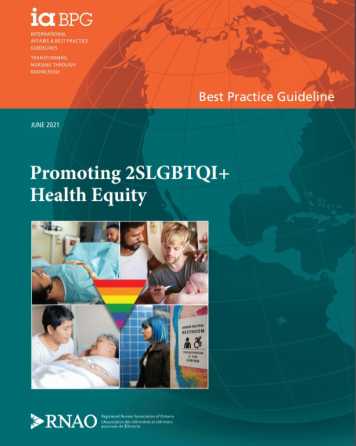
This handout features promising practices to help move long-term care homes towards becoming safe, welcoming and inclusive spaces for the 2SLGBTQI+ community. It was developed as a supplement to the presentation delivered at the AdvantAge Ontario Convention on “A Home for All: Making Long-Term Care Welcoming for 2SLGBTQI+ People” in May 2019. This work stems from the Ontario Centres for Learning, Research and Innovation in Long-Term Care (CLRI)’s Supporting Diversity and Inclusion Advisory Group.
My Personhood Summary© surfaces a person’s life experiences, important relationships, personal preferences, and other psychosocial and environmental factors that influence daily life. It is a foundational tool, intended for use with people living with dementia as well as older adults living with complex mental health, substance use, and/or other neurological conditions.
BSO website is hosted by brainXchange™.
Learn more about the benefits of Person-Centred Care (PCC) with this educational video that defines the fundamental concepts of PCC.
Cancer Care Ontario, 2015.
This tip sheet from Smart Tips for Stroke Care highlights key considerations for supporting individuals experiencing challenges with communicating related to aphagia, after a stroke.
Smart Tips for Stroke Care (2023) was created by members of the Regional Stroke Networks of Ontario.
This tip sheet from Smart Tips for Stroke Care highlights key considerations for supporting individuals experiencing challenges with communicating related to aphagia, after a stroke.
Smart Tips for Stroke Care (2023) was created by members of the Regional Stroke Networks of Ontario.
Nurses have professional and legal obligations for obtaining consent. The College's Consent practice guideline provides an overview of the major features of the relevant legislation, pertinent definitions and the steps that nurses need to take to obtain consent.
© 2025 College of Nurses of Ontario
Website containing resources and information for families of residents in Long term Care.
Family Councils Ontario (2022).
A tool to assist LTC homes in completing a gap analysis regarding how they are doing in their home with Person and Family Centred Care from a resident’s viewpoint. This tool was developed by staff at Woodingford Lodge as part of the LTC BPSO® pre-designation journey.
Woodingford Lodge. (2016). Resident Report Card. Woodstock ON.
A tool to assist LTC homes in completing a gap analysis regarding how they are doing in their home with Person and Family Centred Care from a front-line viewpoint. This tool was developed by staff at Woodingford Lodge as part of the LTC BPSO® pre-designation journey.
Woodingford Lodge. (2016). General Staff Report Card. Woodstock ON.
Practical implementation resources and an e-learn related to implementing person-centred language for patient documentation.
© 2025 Regional Geriatric Program of Toronto.
This website provides all Ontario health care practitioners the information and resources they need to:
Prepare people and their Substitute Decision-Makers (SDMs) for future decision-making (Advance Care Planning).
Support decision-making by engaging people and caregivers in decision-making conversations when needed (Goals of Care Discussions).
© 2024 Hospice Palliative Care Ontario.
The expert panel for the BPG Facilitating Client Centred Learning (2012) developed the L.E.A.R.N.S. Model, which describes how to support effective learning. LEARNS stands for Listen, Establish, Adopt, Reinforce, Name, Strengthen and refers to the nurse/client interaction.
Reference: Registered Nurses’ Association of Ontario (2012). Facilitating Client Centred Learning. Toronto, Canada: Registered Nurses’ Association of Ontario. pp. 19-20.
This tip sheet from Smart Tips for Stroke Care highlights key considerations for engaging individuals in meaningful activities that offer a sense of purpose and help express a person's identity after a stroke.
Smart Tips for Stroke Care (2023) was created by members of the Regional Stroke Networks of Ontario.
This tip sheet from Smart Tips for Stroke Care highlights key considerations for engaging individuals in meaningful activities that offer a sense of purpose and help express a person's identity after a stroke.
Smart Tips for Stroke Care (2023) was created by members of the Regional Stroke Networks of Ontario.
My Personhood Summary© surfaces a person’s life experiences, important relationships, personal preferences, and other psychosocial and environmental factors that influence individuals’ daily lives.
The information from My Personhood Summary© can be used to foster supportive relationships, recommend activities, to promote abilities, maintain social connections, develop tailored care plan strategies and guide person-centred behavioural support plans. The tool is written in first-person to elicit a focus on the person, instead of on their illness(es)/condition(s). Resources on this website are also available in French.
brainXchange™
My Transitional Care Plan© (MTCP) summarizes meaningful information that contributes to the facilitation of successful transitions across sectors for older adults presenting with, or at risk of, responsive behaviours personal expressions associated with dementia, complex mental health, substance use and/or other neurological conditions.
brainXchange™.
Website of Ontario Association of Resident Councils with resources, advocacy and information for residents in LTC in Ontario
Website last updated: November 05, 2025
Ontario Regulation 246/22 was made under The Fixing Long-Term Care Act, 2021 (FLTCA) was proclaimed into force to regulate Ontario's long-term care home sector April 11, 2022.
© King’s Printer for Ontario, 2012-24
Les normes d’exercice informent les infirmières de leurs responsabilités et expliquent leur rôle au public. La relation thérapeutique est la pierre angulaire de la profession infirmière. Et son objectif premier est de favoriser la santé et le bien-être des clients. Pour établir et cultiver cette importante relation, l’infirmière fait appel à ses connaissances et compétences professionnelles ainsi qu’à sa compassion. Relation thérapeutique infirmière-client ou infirmier-client, édition 2006
© Ordre des infirmières et infirmiers de l’Ontario, 2025.
A tool to assist with comparing your organization’s current practice with evidence-based RNAO best practice recommendations.
Registered Nurses Association of Ontario (2022). Opportunity Analysis People-Centred Care. Toronto, ON.
This is the Behavioural Supports Ontario (BSO) website that supports staff with pledging their commitment to Person Centred Language. Posters and a report are also available to support adaption of Person and Family Centred Approach.
© 2025
A printable pocket card designed for health care providers, offering a quick-reference guide with practical tips to support more person-centred care. Adopted from a sample developed by Braemar Retirement Centre as part of their BPSO work.
Braemar Retirement Centre ( 2019) Pocket Card- How to be Person Centred: Tips for Health-care Providers. Wingham, ON.
The Website provides excellent resources focused on the intersection of the LGBTQ community and aging. Some resources are available for download and some resources can be purchased.
© 2025 Rainbow Health Ontario
The Website provides excellent resources focused on the intersection of the LGBTQ community and aging. Some resources are available for download and some resources can be purchased.
© 2025 Rainbow Health Ontario
The aim of this guideline is to provide evidence-based recommendations to facilitate client centred learning that promotes and enables clients to take action for their health. Registered Nurses Association of Ontario (2012) Facilitating Client Centred Learning. Toronto. ON. Author.
Supporting Adults who Anticipate or Live with an Ostomy is a best practice guideline (BPG) that provides nurses and the interprofessional team with evidence-based recommendations for the most effective strategies to support adults (18 years and older) who anticipate or live with an ostomy. The purpose of this BPG is to (a) promote self-management, (b) enhance access and delivery of care, and (c) lead to positive health outcomes in adults who anticipate or live with an ostomy.
The BPG has 6 evidence-based recommendations that address the following: access to Nurses Specialized in Wound, Ostomy, and Continence (NSWOC) to support comprehensive care, the need for a standardized ostomy care program within health service organizations, guidance on the prevention of parastomal hernias, and quality of life assessments in adults who anticipate or live with an ostomy.
This BPG can be used by nurses across the continuum of care and in all domains of practice—such as clinical, research, education, policy, and administration—and members of the interprofessional team. It can also be used by organizations in which they are employed. The evidence-based recommendations in this BPG are applicable to all practice settings where adults who anticipate or live with an ostomy are accessing services (such as, but not limited to, acute care, long-term care, community settings, and rehabilitation settings).
Registered Nurses’ Association of Ontario (2019). Supporting adults who anticipate or live with an ostomy. Toronto, ON: Author.
The Person-and Family-Centred Care best practice guideline can be used to enhance the quality of partnerships between health-care providers with individuals accessing care, ultimately improving clinical outcomes. It is important to acknowledge that person- and family-centred care focuses on the whole person as a unique individual and not just on their illness or disease. By viewing the individual through this lens, health-care providers come to know and understand the person’s life story, experience of health, the role of family in the person’s life, and the role they may play in supporting the person to achieve health.
This guideline provides best practice recommendations in three main areas:
• Practice recommendations are directed primarily to those who provide direct care to persons in health-system settings and in the community.
• Education recommendations are directed to those responsible for staff and student education.
• System, organization, and policy recommendations apply to managers, administrators, policy-makers, nursing regulatory bodies, academic institutions, and government bodies.
This guideline replaces the previous BPG Client Centred Care.
Registered Nurses’ Association of Ontario (2015). Person-and family-centred care. Toronto, ON, Canada: Author.
This work is funded by the Ontario Ministry of Health and Long-Term Care.
Person and family centered care Institute website shares information on the importance of person and family centred care and how it can improve the health care experience of clients, families and health providers. There are also resources such as: inventory of person and family centred care; fact sheets that summarize the concept of person and family centred care and a short video demonstrating the difference between “usual care and person centred care”.
© 2025 Saint Elizabeth Health Care
The Fixing Long-Term Care Act, 2021 (FLTCA) was proclaimed into force to regulate Ontario's long-term care home sector.
The Long-Term Care Homes Act, 2007 (LTCHA) was revoked, which means it is no longer in force. The new Act also includes a new regulation.
Government of Ontario (2021) Fixing Long-Term Care Act, 2021. Toronto, (ON).
© King’s Printer for Ontario, 2012-24
Implementation resources
My Personhood Summary© surfaces a person’s life experiences, important relationships, personal preferences, and other psychosocial and environmental factors that influence daily life. It is a foundational tool, intended for use with people living with dementia as well as older adults living with complex mental health, substance use, and/or other neurological conditions.
BSO website is hosted by brainXchange™.
This tip sheet from Smart Tips for Stroke Care highlights key considerations for supporting individuals experiencing challenges with communicating related to aphagia, after a stroke.
Smart Tips for Stroke Care (2023) was created by members of the Regional Stroke Networks of Ontario.
This tip sheet from Smart Tips for Stroke Care highlights key considerations for supporting individuals experiencing challenges with communicating related to aphagia, after a stroke.
Smart Tips for Stroke Care (2023) was created by members of the Regional Stroke Networks of Ontario.
Nurses have professional and legal obligations for obtaining consent. The College's Consent practice guideline provides an overview of the major features of the relevant legislation, pertinent definitions and the steps that nurses need to take to obtain consent.
© 2025 College of Nurses of Ontario
A tool to assist LTC homes in completing a gap analysis regarding how they are doing in their home with Person and Family Centred Care from a resident’s viewpoint. This tool was developed by staff at Woodingford Lodge as part of the LTC BPSO® pre-designation journey.
Woodingford Lodge. (2016). Resident Report Card. Woodstock ON.
A tool to assist LTC homes in completing a gap analysis regarding how they are doing in their home with Person and Family Centred Care from a front-line viewpoint. This tool was developed by staff at Woodingford Lodge as part of the LTC BPSO® pre-designation journey.
Woodingford Lodge. (2016). General Staff Report Card. Woodstock ON.
This website provides all Ontario health care practitioners the information and resources they need to:
Prepare people and their Substitute Decision-Makers (SDMs) for future decision-making (Advance Care Planning).
Support decision-making by engaging people and caregivers in decision-making conversations when needed (Goals of Care Discussions).
© 2024 Hospice Palliative Care Ontario.
The expert panel for the BPG Facilitating Client Centred Learning (2012) developed the L.E.A.R.N.S. Model, which describes how to support effective learning. LEARNS stands for Listen, Establish, Adopt, Reinforce, Name, Strengthen and refers to the nurse/client interaction.
Reference: Registered Nurses’ Association of Ontario (2012). Facilitating Client Centred Learning. Toronto, Canada: Registered Nurses’ Association of Ontario. pp. 19-20.
This tip sheet from Smart Tips for Stroke Care highlights key considerations for engaging individuals in meaningful activities that offer a sense of purpose and help express a person's identity after a stroke.
Smart Tips for Stroke Care (2023) was created by members of the Regional Stroke Networks of Ontario.
This tip sheet from Smart Tips for Stroke Care highlights key considerations for engaging individuals in meaningful activities that offer a sense of purpose and help express a person's identity after a stroke.
Smart Tips for Stroke Care (2023) was created by members of the Regional Stroke Networks of Ontario.
My Personhood Summary© surfaces a person’s life experiences, important relationships, personal preferences, and other psychosocial and environmental factors that influence individuals’ daily lives.
The information from My Personhood Summary© can be used to foster supportive relationships, recommend activities, to promote abilities, maintain social connections, develop tailored care plan strategies and guide person-centred behavioural support plans. The tool is written in first-person to elicit a focus on the person, instead of on their illness(es)/condition(s). Resources on this website are also available in French.
brainXchange™
My Transitional Care Plan© (MTCP) summarizes meaningful information that contributes to the facilitation of successful transitions across sectors for older adults presenting with, or at risk of, responsive behaviours personal expressions associated with dementia, complex mental health, substance use and/or other neurological conditions.
brainXchange™.
Ontario Regulation 246/22 was made under The Fixing Long-Term Care Act, 2021 (FLTCA) was proclaimed into force to regulate Ontario's long-term care home sector April 11, 2022.
© King’s Printer for Ontario, 2012-24
This is the Behavioural Supports Ontario (BSO) website that supports staff with pledging their commitment to Person Centred Language. Posters and a report are also available to support adaption of Person and Family Centred Approach.
© 2025
A printable pocket card designed for health care providers, offering a quick-reference guide with practical tips to support more person-centred care. Adopted from a sample developed by Braemar Retirement Centre as part of their BPSO work.
Braemar Retirement Centre ( 2019) Pocket Card- How to be Person Centred: Tips for Health-care Providers. Wingham, ON.
Supporting Adults who Anticipate or Live with an Ostomy is a best practice guideline (BPG) that provides nurses and the interprofessional team with evidence-based recommendations for the most effective strategies to support adults (18 years and older) who anticipate or live with an ostomy. The purpose of this BPG is to (a) promote self-management, (b) enhance access and delivery of care, and (c) lead to positive health outcomes in adults who anticipate or live with an ostomy.
The BPG has 6 evidence-based recommendations that address the following: access to Nurses Specialized in Wound, Ostomy, and Continence (NSWOC) to support comprehensive care, the need for a standardized ostomy care program within health service organizations, guidance on the prevention of parastomal hernias, and quality of life assessments in adults who anticipate or live with an ostomy.
This BPG can be used by nurses across the continuum of care and in all domains of practice—such as clinical, research, education, policy, and administration—and members of the interprofessional team. It can also be used by organizations in which they are employed. The evidence-based recommendations in this BPG are applicable to all practice settings where adults who anticipate or live with an ostomy are accessing services (such as, but not limited to, acute care, long-term care, community settings, and rehabilitation settings).
Registered Nurses’ Association of Ontario (2019). Supporting adults who anticipate or live with an ostomy. Toronto, ON: Author.
The Person-and Family-Centred Care best practice guideline can be used to enhance the quality of partnerships between health-care providers with individuals accessing care, ultimately improving clinical outcomes. It is important to acknowledge that person- and family-centred care focuses on the whole person as a unique individual and not just on their illness or disease. By viewing the individual through this lens, health-care providers come to know and understand the person’s life story, experience of health, the role of family in the person’s life, and the role they may play in supporting the person to achieve health.
This guideline provides best practice recommendations in three main areas:
• Practice recommendations are directed primarily to those who provide direct care to persons in health-system settings and in the community.
• Education recommendations are directed to those responsible for staff and student education.
• System, organization, and policy recommendations apply to managers, administrators, policy-makers, nursing regulatory bodies, academic institutions, and government bodies.
This guideline replaces the previous BPG Client Centred Care.
Registered Nurses’ Association of Ontario (2015). Person-and family-centred care. Toronto, ON, Canada: Author.
This work is funded by the Ontario Ministry of Health and Long-Term Care.
The Fixing Long-Term Care Act, 2021 (FLTCA) was proclaimed into force to regulate Ontario's long-term care home sector.
The Long-Term Care Homes Act, 2007 (LTCHA) was revoked, which means it is no longer in force. The new Act also includes a new regulation.
Government of Ontario (2021) Fixing Long-Term Care Act, 2021. Toronto, (ON).
© King’s Printer for Ontario, 2012-24
Education resources
This handout features promising practices to help move long-term care homes towards becoming safe, welcoming and inclusive spaces for the 2SLGBTQI+ community. It was developed as a supplement to the presentation delivered at the AdvantAge Ontario Convention on “A Home for All: Making Long-Term Care Welcoming for 2SLGBTQI+ People” in May 2019. This work stems from the Ontario Centres for Learning, Research and Innovation in Long-Term Care (CLRI)’s Supporting Diversity and Inclusion Advisory Group.
Learn more about the benefits of Person-Centred Care (PCC) with this educational video that defines the fundamental concepts of PCC.
Cancer Care Ontario, 2015.
This tip sheet from Smart Tips for Stroke Care highlights key considerations for supporting individuals experiencing challenges with communicating related to aphagia, after a stroke.
Smart Tips for Stroke Care (2023) was created by members of the Regional Stroke Networks of Ontario.
This tip sheet from Smart Tips for Stroke Care highlights key considerations for supporting individuals experiencing challenges with communicating related to aphagia, after a stroke.
Smart Tips for Stroke Care (2023) was created by members of the Regional Stroke Networks of Ontario.
Website containing resources and information for families of residents in Long term Care.
Family Councils Ontario (2022).
Practical implementation resources and an e-learn related to implementing person-centred language for patient documentation.
© 2025 Regional Geriatric Program of Toronto.
This tip sheet from Smart Tips for Stroke Care highlights key considerations for engaging individuals in meaningful activities that offer a sense of purpose and help express a person's identity after a stroke.
Smart Tips for Stroke Care (2023) was created by members of the Regional Stroke Networks of Ontario.
This tip sheet from Smart Tips for Stroke Care highlights key considerations for engaging individuals in meaningful activities that offer a sense of purpose and help express a person's identity after a stroke.
Smart Tips for Stroke Care (2023) was created by members of the Regional Stroke Networks of Ontario.
Website of Ontario Association of Resident Councils with resources, advocacy and information for residents in LTC in Ontario
Website last updated: November 05, 2025
Les normes d’exercice informent les infirmières de leurs responsabilités et expliquent leur rôle au public. La relation thérapeutique est la pierre angulaire de la profession infirmière. Et son objectif premier est de favoriser la santé et le bien-être des clients. Pour établir et cultiver cette importante relation, l’infirmière fait appel à ses connaissances et compétences professionnelles ainsi qu’à sa compassion. Relation thérapeutique infirmière-client ou infirmier-client, édition 2006
© Ordre des infirmières et infirmiers de l’Ontario, 2025.
The Website provides excellent resources focused on the intersection of the LGBTQ community and aging. Some resources are available for download and some resources can be purchased.
© 2025 Rainbow Health Ontario
The Website provides excellent resources focused on the intersection of the LGBTQ community and aging. Some resources are available for download and some resources can be purchased.
© 2025 Rainbow Health Ontario
The aim of this guideline is to provide evidence-based recommendations to facilitate client centred learning that promotes and enables clients to take action for their health. Registered Nurses Association of Ontario (2012) Facilitating Client Centred Learning. Toronto. ON. Author.
Person and family centered care Institute website shares information on the importance of person and family centred care and how it can improve the health care experience of clients, families and health providers. There are also resources such as: inventory of person and family centred care; fact sheets that summarize the concept of person and family centred care and a short video demonstrating the difference between “usual care and person centred care”.
© 2025 Saint Elizabeth Health Care
Evaluation resources
There are no evaluation resources available for this topic.