RNAO coaches can help

Through collaborations with LTC homes, our team of coaches work towards improving resident care and promoting positive workplaces by implementing RNAO’s clinical and healthy work environment best practice guidelines.

Contact a coach

Identify where you can improve

Use RNAO's gap (opportunity) analysis tool to help identify where evidence-based best practice recommendations can improve your organization's current practice.

Leadership

Supports the development of strong, transformational nursing leadership at all levels. Includes resources to build leadership capacity, foster accountability, and support evidence-based practice.

All resources

External link
The  Developing and Sustaining Nursing Leadership Tips and Tools (2014), brochure describes evidence-based practices that nurses performing both formal and informal nursing leadership roles can use to enhance their skills. It reviews the Five Practices of Transformational Leadership and includes a Leadership Self-Assessment. Leadership practices are relationship-based and are fundamental for transforming nurses’ work settings into healthy work environments. These practices can apply to all nursing roles and levels of leadership. Point-of-care nurses who may not think of themselves as leaders will find meaningful examples of leadership at the point-of-care.  
External link
The Best Practice Champions Network®, established in 2002, includes more than 100,000 change agents in Ontario and around the world. Change agents are people passionate about implementing evidence-based practices and improving care and health. This includes nurses and other health professionals from all roles and health sectors, nursing students, advocates, persons with lived experience, and caregivers. "Champions" raise awareness about RNAO best practice guidelines (BPG), mobilize their peers, and use change management processes and social movement approaches to influence uptake and sustainability of BPGs in their academic and practice settings to benefit the broader communities they serve.   © 2025 RNAO.
External link
The Canadian Evaluation Society Ontario Chapter (CES Ontario) is  the professional association of evaluators.  The CES website includes information about evaluation, standards, guidelines, resources for credentialing and professional development related to evaluation. © 2024 CES  
External link
Canadian Institute for Health Information (CIHI) is an independent, not-for-profit organization that provides essential information on Canada’s health system and the health of Canadians. © CIHI 1996 - 2025
External link
The eLearning series from CLRI (Centres for Learning, Research and Innovation), helps nurses navigate conflict, communicate with confidence, and learn how to thrive as clinical leaders in three short courses. @ 2025 Ontario Centres for Learning, Research, and Innovation in Long-Term Care
External link
2025 Code of Ethics for Nurses, a revamped ethical framework applying to all categories of nurses and is organized around seven core values with guiding principles, context for practice, and ethical responsibilities.   © Copyright 2025 Canadian Nurses Association
External link
The Institute for Healthcare Improvement (IHI) is a leading, globally recognized not-for-profit health care improvement organization that has been applying evidence-based quality improvement methods to meet current and future health care challenges for more than 30 years. IHI developed the Breakthrough Series to help health care organizations make breakthrough improvements in quality while reducing costs. Improvement findings and tools in these reports provide an opportunity to understand and evaluate the issues, and begin testing changes that can help organizations make breakthrough improvements. © Institute for Healthcare Improvement.  
Document
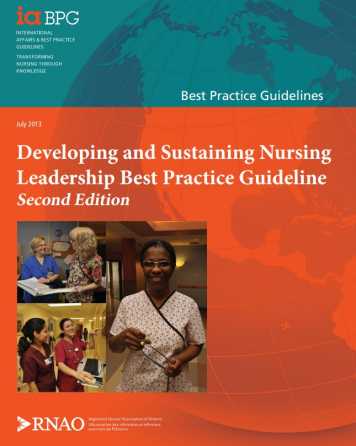
A tool to assist with comparing your organization’s current practice with evidence-based RNAO best practice recommendations. To be used with the RNAO Best Practice Guideline, Developing and Sustaining Nursing Leadership, Second Edition, 2013. Registered Nurses Association of Ontario, Opportunity Analysis-Developing and Sustaining Nursing Leadership, 2017. Toronto, ON.
Document
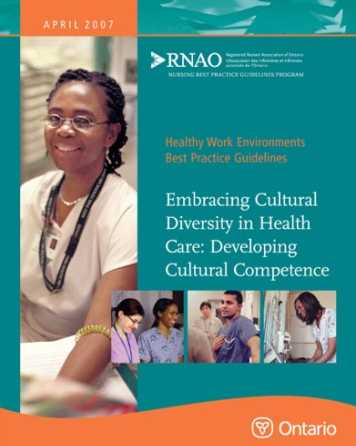
The purpose of this best practice guideline (BPG) is to promote a healthy work environment for nurses by identifying best practices for embracing diversity within health care organizations. The guideline is relevant to all domains and settings where nurses practice. The recommendations in this guideline address: culturally competent practices in the workplace, individual competencies, management practices and institutional policies, transformational strategies for embracing diversity at the level of the individual, group, organization, and health care system, educational requirements and suggested policy changes to support and sustain culturally competent practices. Registered Nurses’ Association of Ontario (2007). Embracing Cultural Diversity in Health Care: Developing Cultural Competence. Toronto, Canada: Registered Nurses’ Association of Ontario.
External link
Health Quality Ontario (HQO), is now part of Ontario Health, an agency created by the Government of Ontario with a mandate to connect and coordinate the province’s health care system to help ensure that Ontarians receive the best possible care.   © King’s Printer for Ontario, 2025
Document
This resource provides implementation tips and strategies for embracing cultural diversity. Registered Nurses’ Association of Ontario. (2007). Appendix F of Embracing Cultural Diversity in Health Care: Developing Cultural Competence Best Practice Guideline. Toronto, ON, Canada: Author. p.82. 
External link
The Institute for Healthcare Improvement (IHI) is a leading, globally recognized not-for-profit health care improvement organization that has been applying evidence-based quality improvement methods to meet current and future health care challenges for more than 30 years. © Institute for Healthcare Improvement.
External link
Cette ligne directrice sur les pratiques exemplaires en soins infirmières et infirmiers est un document détaillé comportant les ressources nécessaires au soutien de la pratique basée sur des données probantes. Un milieu de travail sain, c’est un milieu de pratique qui maximise la santé et le bien-être des infirmières, des résultats de qualité chez le patient ou client, le rendement de l’organisation et du système, et les retombées sociales, y compris des collectivités en meilleure santé. Association des infirmières et infirmiers autorisés de l’Ontario (2013). Lignes directrices sur le développement et le maintien du leadership infirmier, (2em Ed.). Toronto, ON, Canada: Auteur. Ce travail est financé par le Ministère de la Santé et Ministère des Soins de longue durée d'Ontario  
External link
Ontario Long Term Care Home Association (OLTCA), represent 70% of Ontario’s long-term care homes. They are small, medium and large,  private, not-for-profit, municipal, hospital, culturally specific, and First Nations homes in rural, urban, and Northern locations across the province. © Copyright 2025 Ontario Long Term Care Home Association.
External link
College Nurses of Ontario learning module are designed to assist nurses understand CNO practice standards and related documents. The self-study learning modules contain: an introduction, learning objectives, content chapters, a quiz that can be download and completed. The  modules can be reviewed at any time. However, viewing a module and completing the quiz is NOT considered a substitute for reading the CNO practice standard or document. © 2025 College of Nurses of Ontario    
External link
All Ontario long-term care homes are required to submit annual Quality Improvement Plans (QIP) to Health Quality Ontario. The QIP navigator site contains resources to support quality improvement planning and has QIP from various organizations including long-term care homes.   © Ontario 2025    
External link
The Health Quality Ontario website about Quality Improvement and resources to support and promote sustainable improvements in care across Ontario. © King’s Printer for Ontario, 2025
Document
This resource identifies recommendations for individuals looking to embrace diversity in health-care. Registered Nurses’ Association of Ontario (2007). Embracing Cultural Diversity in Health Care: Developing Cultural Competence. Toronto, Canada: Registered Nurses’ Association of Ontario. pp.30-31
External link
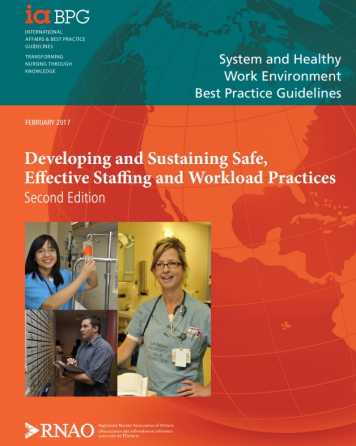
The BPG assists nurses in exploring how the decision making process can ensure that appropriate structures and supports are in place to maximize the nursing care and outcomes and minimize the potential for abuse of residents/patients/clients. Registered Nurses’ Association of Ontario. (2017). RNAO Developing and sustaining safe, effective staffing and workload practices. Toronto, ON: Author. This work is funded by the Ontario Ministry of Health and Long-Term Care  
External link
This guideline provides evidence-based recommendations for RNs and RPNs on best nursing practices for developing and sustaining nursing leadership. Gain knowledge in leadership practices that result in healthy outcomes for nurses, patients/clients, organizations and systems. This guideline addresses leadership practices and behaviours for formal leaders and nurses at the point of care, personal and system resources, organizational culture, and anticipated outcomes of effective nursing leadership. Registered Nurses’ Association of Ontario. (2013). Developing and sustaining nursing leadership. Toronto, ON. Author.  
External link
The RNAO Leading Change Toolkit 4th edition, is a free, online, open-access evidence-informed implementation resource. It focuses on the uptake and sustainability of knowledge – or evidence – and uses two complementary frameworks to help you accelerate your success including the Social Movement Action and Knowledge-To-Action Frameworks. The toolkit also includes a section on how to engage persons with lived experience in a change initiative and/or as a member of a change team. © 2024 RNAO. All rights reserved.
External link
A guideline to help nurses use social media in a professional manner. Registered Nurses’ Association of Ontario. (2013). Social media guidelines for nurses. 
Document
This table lists strategies that may be used by leaders to build relations and trust with individuals as well as teams, units and organizations. Registered Nurses’ Association of Ontario. (2013, July). Developing and Sustaining Nursing Leadership Best Practice Guideline, Second Edition. Toronto, ON, Canada: Author. p. 35.
Document
This resource outlines suggested strategies for leading and sustaining change. Registered Nurses’ Association of Ontario. (2013, July). Developing and Sustaining Nursing Leadership Best Practice Guideline, Second Edition. Toronto, ON, Canada: Author. p.52. 
Document
This table lists suggested strategies for individuals, teams/units and organizations who want to create an environment that supports knowledge development and integration. Registered Nurses’ Association of Ontario. (2013, July). Developing and Sustaining Nursing Leadership Best Practice Guideline, Second Edition. Toronto, ON, Canada: Author. p.47. 
External link
Once a change has been achieved, the journey continues with a focus on sustaining it and creating lasting improvements. This website links to an overview of sustaining evidence based implementation and strategies associated with sustainability success and has downloadable tips and tools to give you and your change team the know-how to effectively make change happen. © 2024 RNAO. All rights reserved.
External link
Developing and Sustaining Nursing Leadership Tips and Tools & Point-of-Care Leadership Tips and Tools for Nurses tool describes evidence-based practices that nurses performing both formal and informal nursing leadership roles can use to enhance their skills. The brochure reviews The Five Practices of Transformational Leader and should be used with Developing and Sustaining Nursing Leadership (2013) best practice guideline. Leadership practices are relationship-based and are fundamental for transforming nurses’ work settings into healthy work environments. These practices can apply to all nursing roles and levels of leadership. Point-of-care nurses who may not think of themselves as leaders will find meaningful examples of leadership at the point-of-care.    

Implementation resources

External link
The  Developing and Sustaining Nursing Leadership Tips and Tools (2014), brochure describes evidence-based practices that nurses performing both formal and informal nursing leadership roles can use to enhance their skills. It reviews the Five Practices of Transformational Leadership and includes a Leadership Self-Assessment. Leadership practices are relationship-based and are fundamental for transforming nurses’ work settings into healthy work environments. These practices can apply to all nursing roles and levels of leadership. Point-of-care nurses who may not think of themselves as leaders will find meaningful examples of leadership at the point-of-care.  
External link
The Best Practice Champions Network®, established in 2002, includes more than 100,000 change agents in Ontario and around the world. Change agents are people passionate about implementing evidence-based practices and improving care and health. This includes nurses and other health professionals from all roles and health sectors, nursing students, advocates, persons with lived experience, and caregivers. "Champions" raise awareness about RNAO best practice guidelines (BPG), mobilize their peers, and use change management processes and social movement approaches to influence uptake and sustainability of BPGs in their academic and practice settings to benefit the broader communities they serve.   © 2025 RNAO.
External link
The Canadian Evaluation Society Ontario Chapter (CES Ontario) is  the professional association of evaluators.  The CES website includes information about evaluation, standards, guidelines, resources for credentialing and professional development related to evaluation. © 2024 CES  
External link
Canadian Institute for Health Information (CIHI) is an independent, not-for-profit organization that provides essential information on Canada’s health system and the health of Canadians. © CIHI 1996 - 2025
External link
The eLearning series from CLRI (Centres for Learning, Research and Innovation), helps nurses navigate conflict, communicate with confidence, and learn how to thrive as clinical leaders in three short courses. @ 2025 Ontario Centres for Learning, Research, and Innovation in Long-Term Care
External link
2025 Code of Ethics for Nurses, a revamped ethical framework applying to all categories of nurses and is organized around seven core values with guiding principles, context for practice, and ethical responsibilities.   © Copyright 2025 Canadian Nurses Association
External link
The Institute for Healthcare Improvement (IHI) is a leading, globally recognized not-for-profit health care improvement organization that has been applying evidence-based quality improvement methods to meet current and future health care challenges for more than 30 years. IHI developed the Breakthrough Series to help health care organizations make breakthrough improvements in quality while reducing costs. Improvement findings and tools in these reports provide an opportunity to understand and evaluate the issues, and begin testing changes that can help organizations make breakthrough improvements. © Institute for Healthcare Improvement.  
Document
A tool to assist with comparing your organization’s current practice with evidence-based RNAO best practice recommendations. To be used with the RNAO Best Practice Guideline, Developing and Sustaining Nursing Leadership, Second Edition, 2013. Registered Nurses Association of Ontario, Opportunity Analysis-Developing and Sustaining Nursing Leadership, 2017. Toronto, ON.
Document
The purpose of this best practice guideline (BPG) is to promote a healthy work environment for nurses by identifying best practices for embracing diversity within health care organizations. The guideline is relevant to all domains and settings where nurses practice. The recommendations in this guideline address: culturally competent practices in the workplace, individual competencies, management practices and institutional policies, transformational strategies for embracing diversity at the level of the individual, group, organization, and health care system, educational requirements and suggested policy changes to support and sustain culturally competent practices. Registered Nurses’ Association of Ontario (2007). Embracing Cultural Diversity in Health Care: Developing Cultural Competence. Toronto, Canada: Registered Nurses’ Association of Ontario.
External link
Health Quality Ontario (HQO), is now part of Ontario Health, an agency created by the Government of Ontario with a mandate to connect and coordinate the province’s health care system to help ensure that Ontarians receive the best possible care.   © King’s Printer for Ontario, 2025
Document
This resource provides implementation tips and strategies for embracing cultural diversity. Registered Nurses’ Association of Ontario. (2007). Appendix F of Embracing Cultural Diversity in Health Care: Developing Cultural Competence Best Practice Guideline. Toronto, ON, Canada: Author. p.82. 
External link
The Institute for Healthcare Improvement (IHI) is a leading, globally recognized not-for-profit health care improvement organization that has been applying evidence-based quality improvement methods to meet current and future health care challenges for more than 30 years. © Institute for Healthcare Improvement.
External link
Cette ligne directrice sur les pratiques exemplaires en soins infirmières et infirmiers est un document détaillé comportant les ressources nécessaires au soutien de la pratique basée sur des données probantes. Un milieu de travail sain, c’est un milieu de pratique qui maximise la santé et le bien-être des infirmières, des résultats de qualité chez le patient ou client, le rendement de l’organisation et du système, et les retombées sociales, y compris des collectivités en meilleure santé. Association des infirmières et infirmiers autorisés de l’Ontario (2013). Lignes directrices sur le développement et le maintien du leadership infirmier, (2em Ed.). Toronto, ON, Canada: Auteur. Ce travail est financé par le Ministère de la Santé et Ministère des Soins de longue durée d'Ontario  
External link
Ontario Long Term Care Home Association (OLTCA), represent 70% of Ontario’s long-term care homes. They are small, medium and large,  private, not-for-profit, municipal, hospital, culturally specific, and First Nations homes in rural, urban, and Northern locations across the province. © Copyright 2025 Ontario Long Term Care Home Association.
External link
College Nurses of Ontario learning module are designed to assist nurses understand CNO practice standards and related documents. The self-study learning modules contain: an introduction, learning objectives, content chapters, a quiz that can be download and completed. The  modules can be reviewed at any time. However, viewing a module and completing the quiz is NOT considered a substitute for reading the CNO practice standard or document. © 2025 College of Nurses of Ontario    
External link
All Ontario long-term care homes are required to submit annual Quality Improvement Plans (QIP) to Health Quality Ontario. The QIP navigator site contains resources to support quality improvement planning and has QIP from various organizations including long-term care homes.   © Ontario 2025    
External link
The Health Quality Ontario website about Quality Improvement and resources to support and promote sustainable improvements in care across Ontario. © King’s Printer for Ontario, 2025
Document
This resource identifies recommendations for individuals looking to embrace diversity in health-care. Registered Nurses’ Association of Ontario (2007). Embracing Cultural Diversity in Health Care: Developing Cultural Competence. Toronto, Canada: Registered Nurses’ Association of Ontario. pp.30-31
External link
The BPG assists nurses in exploring how the decision making process can ensure that appropriate structures and supports are in place to maximize the nursing care and outcomes and minimize the potential for abuse of residents/patients/clients. Registered Nurses’ Association of Ontario. (2017). RNAO Developing and sustaining safe, effective staffing and workload practices. Toronto, ON: Author. This work is funded by the Ontario Ministry of Health and Long-Term Care  
External link
This guideline provides evidence-based recommendations for RNs and RPNs on best nursing practices for developing and sustaining nursing leadership. Gain knowledge in leadership practices that result in healthy outcomes for nurses, patients/clients, organizations and systems. This guideline addresses leadership practices and behaviours for formal leaders and nurses at the point of care, personal and system resources, organizational culture, and anticipated outcomes of effective nursing leadership. Registered Nurses’ Association of Ontario. (2013). Developing and sustaining nursing leadership. Toronto, ON. Author.  
External link
The RNAO Leading Change Toolkit 4th edition, is a free, online, open-access evidence-informed implementation resource. It focuses on the uptake and sustainability of knowledge – or evidence – and uses two complementary frameworks to help you accelerate your success including the Social Movement Action and Knowledge-To-Action Frameworks. The toolkit also includes a section on how to engage persons with lived experience in a change initiative and/or as a member of a change team. © 2024 RNAO. All rights reserved.
External link
A guideline to help nurses use social media in a professional manner. Registered Nurses’ Association of Ontario. (2013). Social media guidelines for nurses. 
Document
This table lists strategies that may be used by leaders to build relations and trust with individuals as well as teams, units and organizations. Registered Nurses’ Association of Ontario. (2013, July). Developing and Sustaining Nursing Leadership Best Practice Guideline, Second Edition. Toronto, ON, Canada: Author. p. 35.
Document
This resource outlines suggested strategies for leading and sustaining change. Registered Nurses’ Association of Ontario. (2013, July). Developing and Sustaining Nursing Leadership Best Practice Guideline, Second Edition. Toronto, ON, Canada: Author. p.52. 
Document
This table lists suggested strategies for individuals, teams/units and organizations who want to create an environment that supports knowledge development and integration. Registered Nurses’ Association of Ontario. (2013, July). Developing and Sustaining Nursing Leadership Best Practice Guideline, Second Edition. Toronto, ON, Canada: Author. p.47. 
External link
Once a change has been achieved, the journey continues with a focus on sustaining it and creating lasting improvements. This website links to an overview of sustaining evidence based implementation and strategies associated with sustainability success and has downloadable tips and tools to give you and your change team the know-how to effectively make change happen. © 2024 RNAO. All rights reserved.
External link
Developing and Sustaining Nursing Leadership Tips and Tools & Point-of-Care Leadership Tips and Tools for Nurses tool describes evidence-based practices that nurses performing both formal and informal nursing leadership roles can use to enhance their skills. The brochure reviews The Five Practices of Transformational Leader and should be used with Developing and Sustaining Nursing Leadership (2013) best practice guideline. Leadership practices are relationship-based and are fundamental for transforming nurses’ work settings into healthy work environments. These practices can apply to all nursing roles and levels of leadership. Point-of-care nurses who may not think of themselves as leaders will find meaningful examples of leadership at the point-of-care.    

Education resources

External link
The Canadian Evaluation Society Ontario Chapter (CES Ontario) is  the professional association of evaluators.  The CES website includes information about evaluation, standards, guidelines, resources for credentialing and professional development related to evaluation. © 2024 CES  
External link
Canadian Institute for Health Information (CIHI) is an independent, not-for-profit organization that provides essential information on Canada’s health system and the health of Canadians. © CIHI 1996 - 2025
External link
The eLearning series from CLRI (Centres for Learning, Research and Innovation), helps nurses navigate conflict, communicate with confidence, and learn how to thrive as clinical leaders in three short courses. @ 2025 Ontario Centres for Learning, Research, and Innovation in Long-Term Care
External link
2025 Code of Ethics for Nurses, a revamped ethical framework applying to all categories of nurses and is organized around seven core values with guiding principles, context for practice, and ethical responsibilities.   © Copyright 2025 Canadian Nurses Association
External link
The Institute for Healthcare Improvement (IHI) is a leading, globally recognized not-for-profit health care improvement organization that has been applying evidence-based quality improvement methods to meet current and future health care challenges for more than 30 years. IHI developed the Breakthrough Series to help health care organizations make breakthrough improvements in quality while reducing costs. Improvement findings and tools in these reports provide an opportunity to understand and evaluate the issues, and begin testing changes that can help organizations make breakthrough improvements. © Institute for Healthcare Improvement.  
Document
The purpose of this best practice guideline (BPG) is to promote a healthy work environment for nurses by identifying best practices for embracing diversity within health care organizations. The guideline is relevant to all domains and settings where nurses practice. The recommendations in this guideline address: culturally competent practices in the workplace, individual competencies, management practices and institutional policies, transformational strategies for embracing diversity at the level of the individual, group, organization, and health care system, educational requirements and suggested policy changes to support and sustain culturally competent practices. Registered Nurses’ Association of Ontario (2007). Embracing Cultural Diversity in Health Care: Developing Cultural Competence. Toronto, Canada: Registered Nurses’ Association of Ontario.
External link
Health Quality Ontario (HQO), is now part of Ontario Health, an agency created by the Government of Ontario with a mandate to connect and coordinate the province’s health care system to help ensure that Ontarians receive the best possible care.   © King’s Printer for Ontario, 2025
External link
The Institute for Healthcare Improvement (IHI) is a leading, globally recognized not-for-profit health care improvement organization that has been applying evidence-based quality improvement methods to meet current and future health care challenges for more than 30 years. © Institute for Healthcare Improvement.
External link
Ontario Long Term Care Home Association (OLTCA), represent 70% of Ontario’s long-term care homes. They are small, medium and large,  private, not-for-profit, municipal, hospital, culturally specific, and First Nations homes in rural, urban, and Northern locations across the province. © Copyright 2025 Ontario Long Term Care Home Association.
External link
College Nurses of Ontario learning module are designed to assist nurses understand CNO practice standards and related documents. The self-study learning modules contain: an introduction, learning objectives, content chapters, a quiz that can be download and completed. The  modules can be reviewed at any time. However, viewing a module and completing the quiz is NOT considered a substitute for reading the CNO practice standard or document. © 2025 College of Nurses of Ontario    
External link
The Health Quality Ontario website about Quality Improvement and resources to support and promote sustainable improvements in care across Ontario. © King’s Printer for Ontario, 2025
External link
This guideline provides evidence-based recommendations for RNs and RPNs on best nursing practices for developing and sustaining nursing leadership. Gain knowledge in leadership practices that result in healthy outcomes for nurses, patients/clients, organizations and systems. This guideline addresses leadership practices and behaviours for formal leaders and nurses at the point of care, personal and system resources, organizational culture, and anticipated outcomes of effective nursing leadership. Registered Nurses’ Association of Ontario. (2013). Developing and sustaining nursing leadership. Toronto, ON. Author.  
External link
A guideline to help nurses use social media in a professional manner. Registered Nurses’ Association of Ontario. (2013). Social media guidelines for nurses. 
External link
Developing and Sustaining Nursing Leadership Tips and Tools & Point-of-Care Leadership Tips and Tools for Nurses tool describes evidence-based practices that nurses performing both formal and informal nursing leadership roles can use to enhance their skills. The brochure reviews The Five Practices of Transformational Leader and should be used with Developing and Sustaining Nursing Leadership (2013) best practice guideline. Leadership practices are relationship-based and are fundamental for transforming nurses’ work settings into healthy work environments. These practices can apply to all nursing roles and levels of leadership. Point-of-care nurses who may not think of themselves as leaders will find meaningful examples of leadership at the point-of-care.    

Evaluation resources

Evaluation resources
External link
The  Developing and Sustaining Nursing Leadership Tips and Tools (2014), brochure describes evidence-based practices that nurses performing both formal and informal nursing leadership roles can use to enhance their skills. It reviews the Five Practices of Transformational Leadership and includes a Leadership Self-Assessment. Leadership practices are relationship-based and are fundamental for transforming nurses’ work settings into healthy work environments. These practices can apply to all nursing roles and levels of leadership. Point-of-care nurses who may not think of themselves as leaders will find meaningful examples of leadership at the point-of-care.  

BPG appendices

Document
This resource provides implementation tips and strategies for embracing cultural diversity. Registered Nurses’ Association of Ontario. (2007). Appendix F of Embracing Cultural Diversity in Health Care: Developing Cultural Competence Best Practice Guideline. Toronto, ON, Canada: Author. p.82.